
Cart
There are no more items in your cart



What is Cannabis ruderalis and What is It Used For?
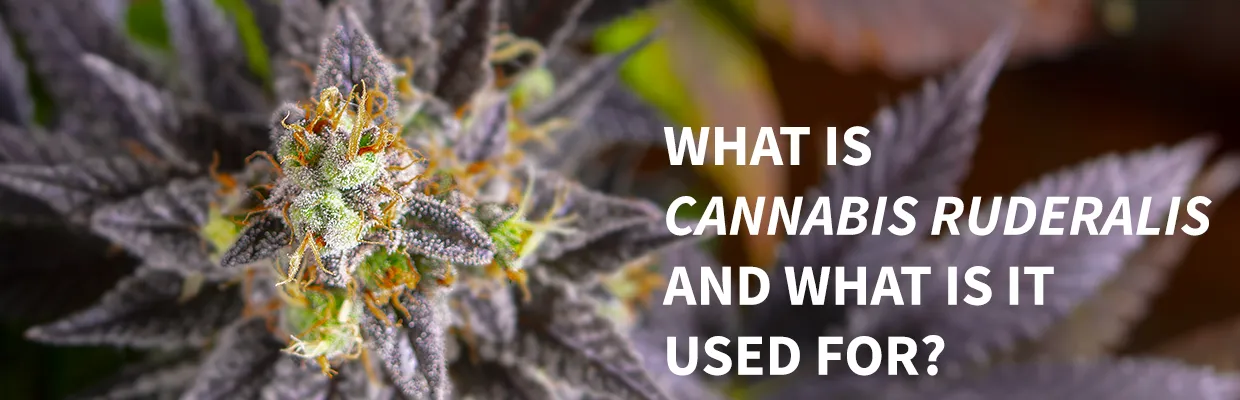
Surely the term Cannabis ruderalis sounds familiar to you, although you may not be entirely sure what it means or what the characteristics of this type of plant are. In this article, we are going to explain it all in detail so you can understand what Cannabis ruderalis is and how it is used.
You may have wondered at some point about the fast flowering and photoperiod-independent traits found in autoflowering strains. These unique features are inherited from the Cannabis ruderalis plant, a subspecies of Cannabis sativa L. that has revolutionized the cannabis scene over the past two decades.
Unlike Cannabis sativa L., Cannabis ruderalis in its original (landrace) forms has very low psychoactivity, little resin production, and an unremarkable terpene profile.
In this article, we will explore this subspecies, reviewing its journey from an undervalued plant to its current fame, as well as the outstanding work carried out by breeders around the world.
We will also include a bit of history on the re-evolution of autoflowering strains led by Sweet Seeds® from 2008 to the present day, which will help you discover that modern autoflowering hybrids are just as good as the most potent and resinous Indica-Sativa photoperiod-dependent hybrids.
Origins of Cannabis ruderalis
Cannabis ruderalis originates from several cold regions of Eastern Europe and Central Asia. There are numerous records of native Cannabis ruderalis plants in countries such as Russia and Hungary, as a result of their adaptation to the climate conditions of these regions, marked by long winters and no more than three or four months of minimally favorable weather for proper growth of the cannabis plant.

In theory, these plants developed the autoflowering trait as an adaptive advantage to the local conditions. This allowed them to flower and produce buds and seeds during the brief period of favorable weather, ensuring their survival in areas where the climate would be extremely harsh for any photoperiod-dependent cannabis plant.
A hundred years ago, in 1924, the Cannabis ruderalis plant was scientifically classified and described by Soviet botanists. Initially, it was considered a wild plant with no medicinal or recreational interest due to its low THC content and poor organoleptic qualities (aroma and flavor). At the same time, it was also dismissed for industrial use, such as fiber and paper production, because of its short stature.
Physical Characteristics of Cannabis ruderalis
As mentioned, Cannabis ruderalis is a short plant that tends to develop multiple lateral branches, resembling a small pine tree at the end of its flowering stage.
It usually does not grow taller than 70 centimeters, giving it an extremely discreet appearance, especially when growing wild in nature, where it can easily be mistaken for a small shrub or any other bush.
Being a subspecies of Cannabis sativa L. with automatic flowering, ruderalis plants begin to flower once they reach sufficient maturity, which usually happens between days 24 and 32 after seed germination. Once flowering starts, original landrace Cannabis ruderalis may take between 4 and 10 weeks to reach full maturity.
In the case of modern autoflowering hybrids, the flowering period ranges from 4 to 6 weeks, as they have been selectively bred for fast flowering, always without neglecting other desirable traits.

Ruderalis, Indica or Sativa: Which Strain Should You Choose?
Growing Cannabis ruderalis would only make sense for ornamental purposes, given its limited recreational potential. For recreational use, the real question is whether to choose a ruderalis hybrid with indica-dominant genetics, sativa-dominant genetics, or a balanced 50/50 hybrid.
In this case, it depends on personal preference. Those looking for more energizing and psychoactive effects will find sativa-dominant autoflowering strains ideal.
On the other hand, if you prefer more sedative and relaxing effects, your best choice will be indica-dominant autoflowering hybrids. Why not go for the best of both worlds? Autoflowering strains with balanced indica-sativa genetics offer a complete and highly enjoyable experience.
What Are the Uses of Cannabis ruderalis?
Although original landrace Cannabis ruderalis has few uses beyond serving as a genetic base for modern autoflowering hybrids, these plants may also have applications in industrial hemp. These include textiles, food, paper production, construction, and many more applications and uses.
However, as previously mentioned, Cannabis ruderalis plants are short in stature, making them less attractive for industrial hemp production, where large-sized genetics are clearly the favorite of farmers. These typically involve plants capable of reaching significant heights, which is something that does not occur with cannabis ruderalis.
Wild strains of Cannabis ruderalis generally feature low THC levels and relatively high CBD content. As such, even though they hold little interest for recreational or fiber use, their autoflowering capacity and extremely fast flowering time are of great interest to those growing cannabis for medicinal or ornamental purposes.
Modern hybrids developed from Cannabis ruderalis can also be useful for therapeutic applications in cases where it is important to benefit from CBD without the psychoactive effects of high-THC strains.
Tips and Practices for Growing Cannabis ruderalis
To successfully grow this type of plant, it’s essential that they receive plenty of light, whether from the sun or quality artificial lighting with sufficient intensity. The plants also need enough space to develop their roots, so it’s recommended to use pots with a minimum capacity of 9 liters. Choosing a quality substrate for soil-based grows is also crucial if you want to maximize yields.
Likewise, as with all cannabis plants, proper nutrition with macro and micronutrients, along with good pest prevention practices, is key to achieving the best results. On this Sweet Seeds® blog, you’ll find several articles full of valuable growing tips that you can apply when growing Cannabis ruderalis.
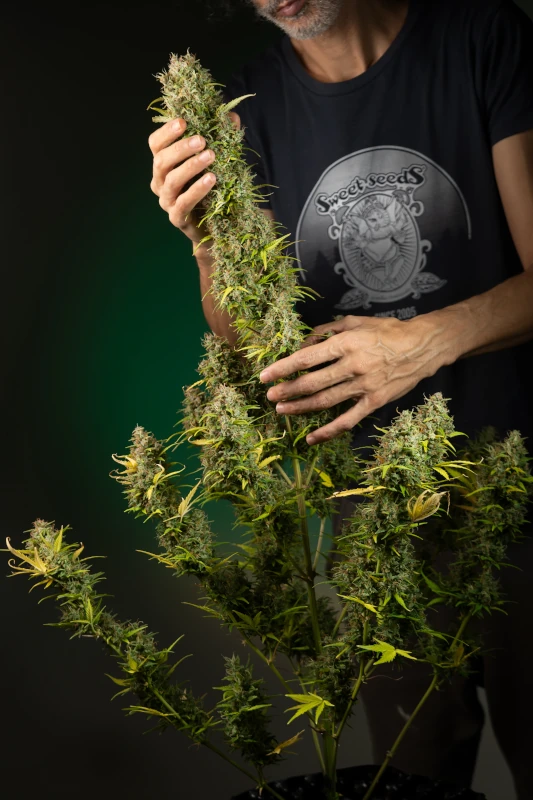
In addition, their great resilience makes them an ideal option for grows in environments where other strains might not thrive properly, such as discreet guerrilla grows. However, to achieve the highest yield and quality, it’s essential to provide them with the most optimal environment possible.
Is Cannabis ruderalis Legal?
There is no specific legislation for the Cannabis ruderalis plant. Although it is a subspecies of Cannabis sativa L., current legislation does not distinguish between them. However, in an increasing number of countries, such as Spain, there is a legal distinction between cannabis flowers with a THC content below 0.2% and those that exceed this threshold.
Since the original landrace Cannabis ruderalis plant contains very low levels of THC, it could be considered, to some extent, legal. Nonetheless, cannabis cultivation is not legal, so it cannot be clearly stated that growing Cannabis ruderalis is lawful.
As always, we recommend that our readers consult the laws in their place of residence before taking any action.
How is Cannabis ruderalis Used in Genetic Breeding?
The main role of Cannabis ruderalis in breeding for autoflowering genetics is precisely its automatic flowering trait, which causes the plants to begin flowering regardless of the number of light hours they receive each day. The rest of its characteristics are of little interest for breeders of modern autoflowering strains.
Thus, when ruderalis genetics began to be used in the development of autoflowering strains, breeders’ goals were always to ensure that the resulting hybrid contained the minimum possible amount of genetics from the ruderalis parent.
At Sweet Seeds®, our meticulous selection work, generation after generation, has allowed our more advanced-generation autoflowering strains to contain only trace amounts of ruderalis genetics. In many cases, the ruderalis content is below 1%.
It’s true that ruderalis genetics can also be used to reduce the excessive height of certain sativa-dominant strains, but in general terms, the only trait of interest to the modern cannabis scene is its ability to flower independently of the photoperiod.
The first documented attempts at crossing Cannabis ruderalis with high-THC strains were carried out by Ernest Small of Agriculture Canada in Ontario during the 1970s. After that decade, a few pioneers in cannabis breeding recognized the potential of these plants and began crossing them with high-THC strains.
Soon after, in the 1980s, Neville gained prominence in this field. The well-known owner of the pioneering Seed Bank became known for experimenting with crosses between Cannabis ruderalis and various Mexican strains, as well as Skunk #1, among others.
Around the same time in British Columbia (Canada), the famous Mighty Mite strain was developed. This strain quickly became very popular, especially for enabling Canadian growers to harvest before the end of summer and the arrival of early rains and mold.
At the end of the 1990s, “The Joint Doctor” appeared on the scene and marked a turning point in the world of autoflowering cannabis. This breeder was a pioneer in successfully crossing a ruderalis plant with a strain then known as “Mexican Rudy.” The result of this breeding program was the first commercial autoflowering cannabis plant that combined adequate THC levels with a size more appealing to growers.
What do we do at Sweet Seeds® to Produce Healthy and Outstanding Seeds?
At Sweet Seeds®, we select elite photoperiod-dependent clones for their ability to pass on high genetic potential and stability. These elite clones are then crossed with autoflowering strains chosen from the healthiest and most outstanding individuals. This ensures that the plants inherit the autoflowering trait while preserving the best qualities of the photoperiod-dependent parent.
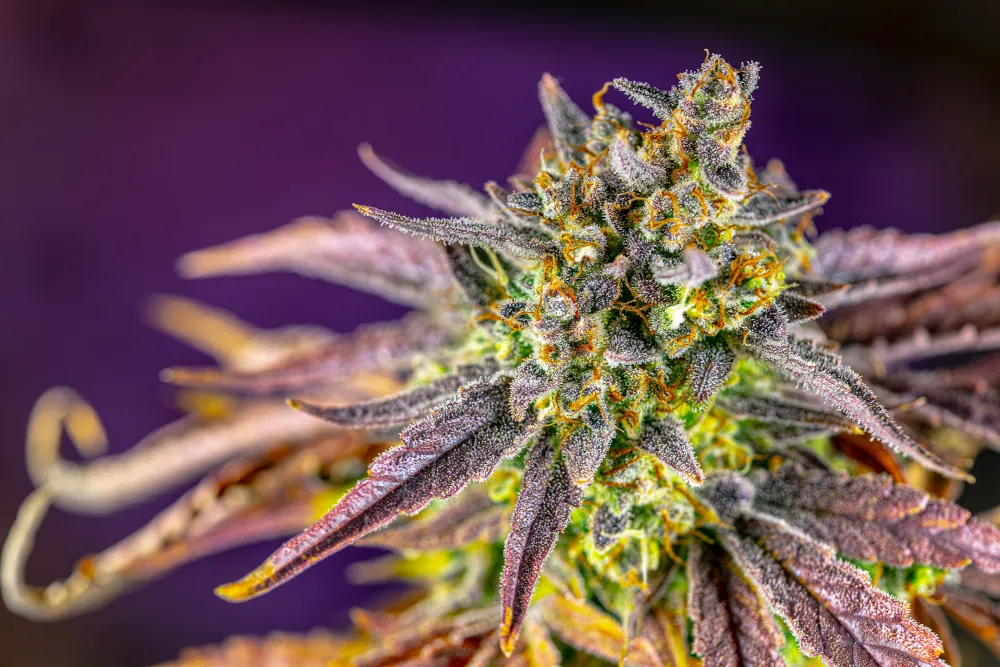
In this way, ruderalis genetics contribute their fixed life cycle, independent of the photoperiod, while the photoperiod-dependent plants (whether sativa or indica) contribute the flavor, aroma, potency, and structural development that enhance final yields.
As a result, we obtain autoflowering strains with indica tendencies when crossed with an indica photoperiod-dependent parent, and conversely, with a more sativa profile when using genetics that lean towards sativa traits.
Over time, new features have been introduced through the selection of our best autoflowering plants. In recent years, there has been significant progress in both quality and yield, with each generation reinforcing the desirable traits and minimizing the influence of ruderalis genetics.
Selecting autoflowering plants from seeds allows us to improve the genetics with each generation, while also allowing us to introduce new nuances into the cultivars. Today, autoflowering strains are highly popular thanks to the many advantages they offer to cannabis growers.
They stand out for their discretion, fast growing cycle, and because they don’t require changes in the photoperiod to begin flowering. These traits make them ideal for spring or early summer harvests, as well as for balcony grows exposed by public lighting at night, where ensuring 12 hours of darkness per day may not be possible.
Find the Cannabis Strain that You Are Looking for at Sweet Seeds®
Finally, we invite you to explore the fascinating world of cannabis with Sweet Seeds®. Discover our wide range of carefully selected cannabis seeds, bringing you top-tier modern genetics, including strains with Cannabis ruderalis influence.
Our team is always available to offer guidance and help you find the option that best suits your needs. Take the first step toward a unique growing experience and take advantage of the benefits that only our seeds can offer. Contact us today and bring your next grow project to life!
Sweet Seeds S.L. is not responsible for any misuse of the information provided in this article. Growing Cannabis may constitute a criminal offense or administrative infraction; please check the Cannabis legislation applicable in your place of residence. Sweet Seeds S.L. does not, under any circumstances, intend to promote illegal practices.

Director of the Content and Image Department at Sweet Seeds®.
Articles by Tommy L. Gomez (see all)
- The Green Poison® Family - 16 de March de 2026
- Top 10 Strongest Weed Strains - 25 de February de 2026
- The Cream Caramel® Family - 5 de February de 2026