
Cart
There are no more items in your cart



Growing Marijuana Indoors with LED Lights
One of the most fundamental elements when it comes to growing marijuana indoors is, without a doubt, lighting. Choosing the right lighting for your cannabis plants is one of the most important decisions that you can make as a grower to achieve optimal results, which is why most people choose growing marijuana indoors with LED lights.
If you have been looking to learn everything about growing marijuana indoors with LED lights, we’ll help you gather the essential knowledge you need to choose the best LED lighting system that fits your indoor grow.
Introduction to LED Lighting for Indoor Growing
The lighting used for indoor plant growing has evolved over time, from the use of HPS or MH lamps to what is now one of the best lighting alternatives: LED lighting.
LED lights are a type of lighting that emits light when an electric current passes through a semiconductor device or material, resulting in a greater proportion of electrical energy being converted into light rather than heat.
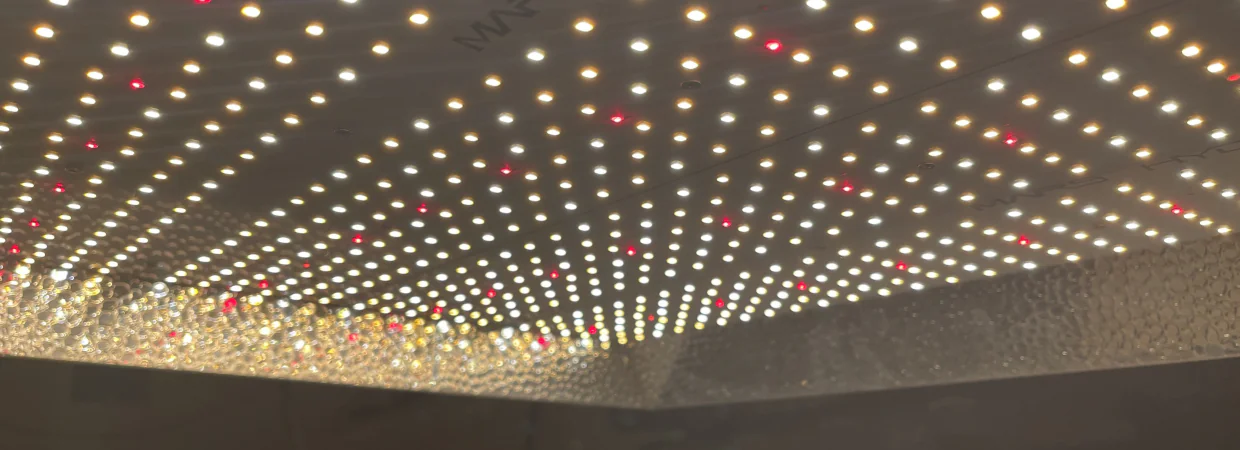
This type of lighting is an ideal option for growing marijuana indoors due to its higher energy efficiency. In addition, LED lighting offers the advantage of providing a light spectrum that can be adjusted to meet the needs of cannabis plants, with the ability to reproduce or mimic sunlight.
Advantages of Growing with LED Lights
Growing marijuana indoors using LED technology gives us the opportunity to enjoy several advantages over other types of lighting, such as HPS, MH, or fluorescent lamps.
Here are some of the advantages you can get from an indoor grow with LED:
- Higher energy efficiency: LED lights consume up to 50% less energy than HID lamps (HPS or MH), which translates into significant savings on your electricity bill.
- Lower temperature: LED lights produce much less heat than HPS or MH lamps, which helps reduce the need for extraction systems or air conditioning. This leads to additional energy savings and better growth in your grow room. It also contributes to the development of flowers with a higher concentration of trichomes and a richer terpene profile.
- Adjustable light spectrum: LED lights offer a wide range of light spectrums, allowing us to choose the most suitable options for our indoor grow, promoting healthy development and resulting in the potential to grow large cannabis plants.
- Longer lifespan: LED lights have a much longer lifespan compared to HID lamps, meaning you don’t have to replace them as often. This results in more savings and a reduced environmental impact.
- Suitable for small spaces: Since they don’t produce as much heat as HPS or MH lamps, LED lights have the advantage of being usable in small spaces, as they can be placed closer to the plants with less risk of burning them.
As we’ve seen in recent years, LED technology has evolved to outperform HID systems, offering great advantages for growing marijuana indoors with LED lights. Major companies have also been investing in this technology, even focusing on developing specific solutions for growing medicinal cannabis with LEDs.
Choosing LED Lights for Growing Marijuana
When choosing LED lights for your indoor grow, it’s important to take several factors into account. Below, we’ll go over the key points that you should consider if you’re planning to grow using LED lights.
Size of the Grow Area
One of the first factors to consider when starting your indoor grow with LED lights is the size of your available grow space.
In general, it’s recommended to use between 300 and 500 watts of LED light per square meter, although most indoor grow LED light setups on the market come in 600W and 1000W, which allow for higher yields.
Growth Stage and Light Spectrum
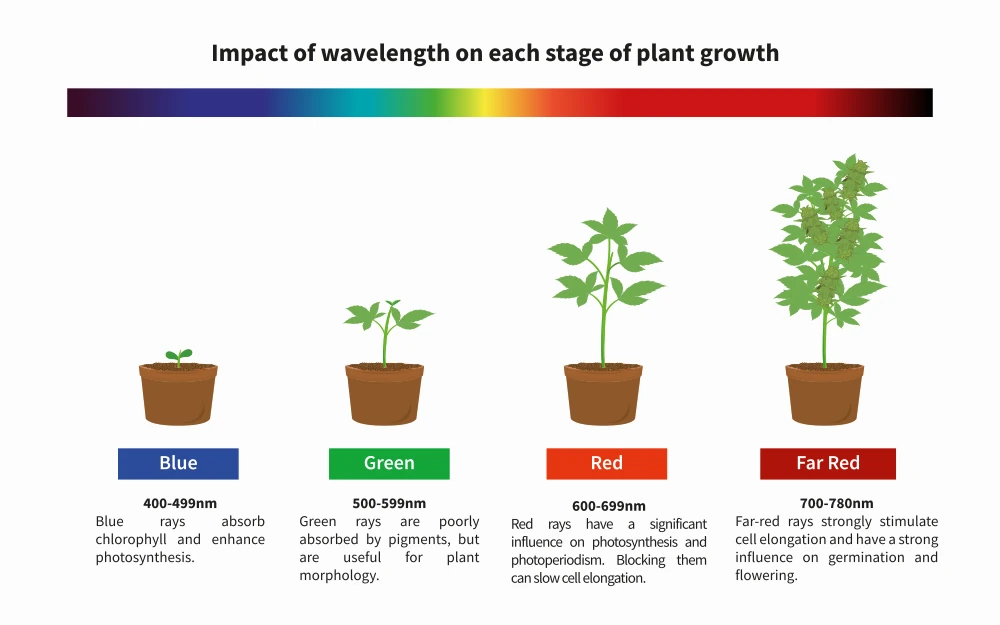
Marijuana plants require different light spectrums during each growth stage, and one of the advantages of LED lighting is the ability to select the light spectrum. During the vegetative stage, it is recommended to use LED lights with a dominant blue light spectrum, while during the flowering stage, a dominant red-light spectrum is preferred.
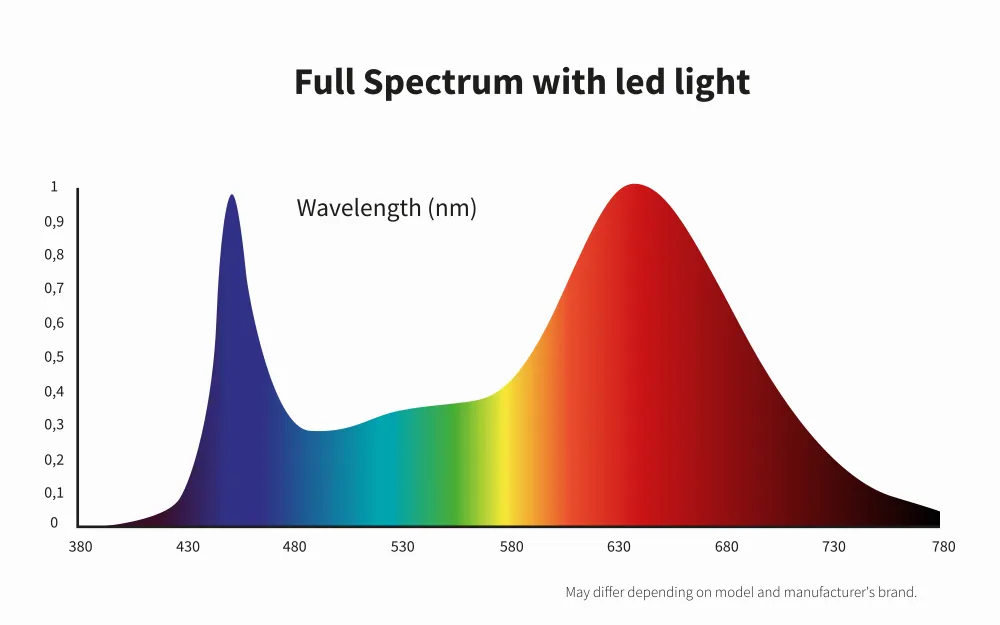
There are also ‘Full Spectrum’ versions available, which provide a complete light spectrum for both the vegetative and flowering phases. These full-spectrum versions project light similar to that of the sun, as they simulate all types of light or spectrums emitted by sunlight.
Power and Light Intensity
In addition to the light spectrum, we must also pay attention to power and intensity, as it’s important to choose a LED lighting kit with the right power for the available space.
In this regard, we’ll come across power measured in W (watts) and intensity measured through PPF (photosynthetic photon flux), in µmol/s. Then there’s the photosynthetic photon flux density or PPFD, measured in µmol/s/m², which gives a more accurate reading of light intensity per square meter.
Types of LED Lights
Currently, there are two main types of LED lights used in indoor cannabis growing: SMD (Surface Mounted Diode) and the newer COB (Chip on Board) models.
The differences between these types of LEDs are:
- COB LEDs have the best lumen-per-watt ratio and heat efficiency.
- COB LEDs offer better durability compared to SMD LEDs.
- SMD LEDs are very common and also more affordable.
It’s also important to note that new lighting systems on the market are now using next-generation COB LEDs due to their improved performance and efficiency.
Some brands you’ll find offering these types of LEDs for cannabis growing include Lumatek with their Zeus model, or Solux with their Galaxy Pro LED system.
LED Lighting Setup for Indoor Growing
Once you’ve selected the right LED lights, an important step is to create the correct setup to ensure uniform light coverage across your grow space and thus maximize light efficiency.
Light Height
LED lights must be placed at an appropriate distance from the plants. In general, it is recommended to hang LED lights at a distance of 30 to 45 cm from the tops of the plants during the vegetative stage, and 20 to 30 cm during the flowering stage to avoid running out of vertical space.
Take plant growth into account, especially at the beginning of the flowering phase, to avoid running out of vertical space. This is a common mistake among beginner growers, who end up damaging the tops of the plants due to their proximity to the LED lamp, trusting that it doesn’t produce too much heat.
Light Cycle
Marijuana plants need a light cycle of 18 hours of light and 6 hours of darkness during the vegetative stage. For the flowering stage, it is recommended to reduce the light cycle to 12 hours of light and 12 hours of darkness, as this is necessary to trigger the flowering process. You should adjust the light periods based on the current growth stage.
Remember, autoflowering strains do not require a specific light cycle to begin flowering. That’s why autoflowering cannabis seeds can be a good option if you don’t want to worry about light schedules or if you want to apply an 18-hour light cycle from germination to harvest in order to achieve a better yield by taking advantage of this autoflowering trait.
Plant Positioning
It is important to have a good layout of the plants in your grow space, as this allows for more efficient use of the available light.
To achieve better results and ensure the plants receive the optimal amount of light for proper development, it’s ideal to arrange them in an optimal distribution according to the shape and position of your LED lights.
Tips for Successful Indoor Cannabis Growing with LED Lights
Maybe you are looking for some basic tips to help you succeed at growing marijuana indoors with LED lights. But don’t worry, because here are a few that can really help you achieve higher yields:
- Ensure proper ventilation: It is quite important to have a good ventilation system to renew the air in your grow space and help control the temperature.
- Monitor humidity levels: Marijuana plants thrive in an environment with around 70% relative humidity during the vegetative stage and about 50% during flowering.
- Water appropriately: The watering frequency will depend on the size of your plants, the type of substrate, and environmental conditions. Keep your plants properly hydrated and avoid overwatering. Keep in mind that indoor growing with LED panels typically requires less water when compared to using high-pressure sodium lamps or bulbs.
- Feed your plants: Marijuana plants need nutrients to grow and develop. Use an appropriate feeding plan and follow the manufacturer’s instructions.
- Use the right LED lighting: As we explained earlier, it’s important to use proper lighting. Make sure to check the manufacturer’s specifications and ensure they fit your cannabis grow space.
Get the Best Marijuana Seeds at Sweet Seeds®
Remember that choosing the best seeds and strains is essential, because an important part of your success will also depend on the genetics you decide to grow.
If you are looking to buy the best marijuana seeds to add to your collection, you can find great options among the Sweet Seeds® range.
Strains like Green Poison® (SWS14) can be a perfect choice of photoperiod-dependent marijuana seeds, as they deliver excellent results in indoor setups. You can also go for highly aromatic strains like our Diablo Rojo XL Auto® (SWS110), which benefits from LED lighting that helps boost the production of highly aromatic resin on your beloved cannabis plants.
Check out our full collection of cannabis seeds by visiting our catalog on our website.
Sweet Seeds S.L. is not responsible for any misuse of the information provided in this article. Growing Cannabis may constitute a criminal offense or administrative infraction; please check the Cannabis legislation applicable in your place of residence. Sweet Seeds S.L. does not, under any circumstances, intend to promote illegal practices.itar a prácticas no legales.
Deputy Director of the Content and Image Department at Sweet Seeds®.
Articles by Jaypp (see all)
- How to Use Bat Guano in Cannabis Cultivation - 25 de February de 2026
- Growing Marijuana Indoors with LED Lights - 26 de September de 2025
- Differences Between Cannabis Indica and Cannabis Sativa - 26 de September de 2025