
Cart
There are no more items in your cart



All About Kief – Make the Most of Your Buds!

Today, we are heading to one of the most disadvantaged areas in North Africa, a place that, for many, symbolizes peace and serenity, and where for centuries a product deeply rooted in the region’s culture has been consumed: we’re talking about kief, and we are referring to the Rif.
The Rif is a mountainous and stunningly beautiful region in northern Africa, with green areas and steep cliffs. It spans part of Morocco’s Mediterranean coast and shares a border with Algeria.
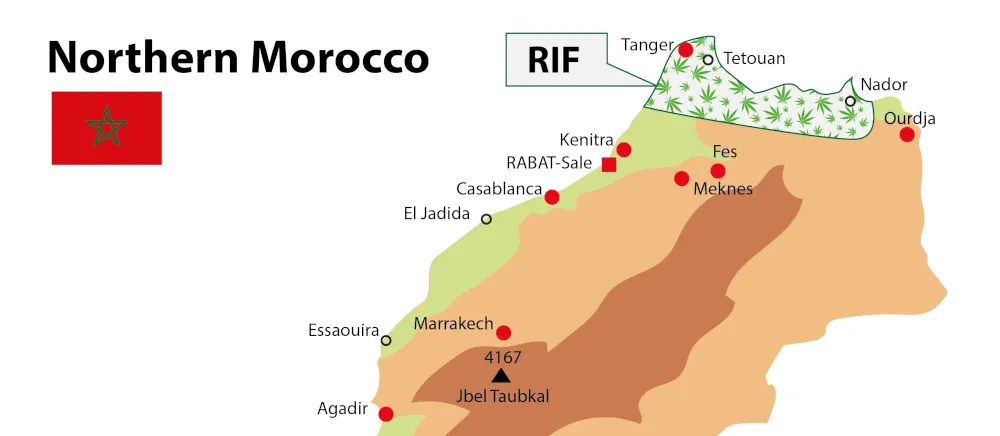
In this region, you’ll find towns like Chefchaouen, Al Hoceima, Nador, or Ketama, among others. If you’ve ever visited the area, you probably noticed the locals smoking from long, thin pipes made of wood or metal, with a small clay bowl where they place the kief.
These pipes are called sebsi, and they’re ideal for cooling the smoke before inhalation. This tradition goes back thousands of years and has been used by the local population for recreational purposes.
In this article, we are going to uncover the mysteries of kief and explain exactly what it’s made of and how to prepare your own kief, since many blogs describe it as a cannabis extract, but that description is not entirely accurate.
Are you ready to keep reading?
What Is Kief?
Now let’s dive deeper into the topic to unravel everything surrounding kief, so you can impress your friends and teach them some firsthand cannabis history.
Expectation
If you search for kief on Google, you’ll usually find it defined as a dry sift extraction from cannabis buds, where the trichomes (those shiny glands that cover the buds and store cannabinoids like THC or CBD, as well as the essential oils that give cannabis its aroma and flavor, among other compounds) are separated from the plant material through a mechanical process once the plants are dry.
A mesh screen is typically used to make this separation, and this mesh has a specific size that allows only the trichome heads to pass through, as these are what contain the desirable compounds. Once collected, it appears as a golden powder to the naked eye, very similar to desert sand. In lower-quality samples, it may look greener due to contaminants such as leaf particles. Supposedly, this is what kief is, according to many blogs and even Wikipedia.
We’d like to clarify here that this extract is what’s commonly known as “pollen” and usually comes in powder form, sometimes clumped together but not pressed (we’ll explain the difference later on).
This dry sift extraction, when observed under a microscope or a good macro lens, you can clearly distinguish the crystalline balls, which are the trichome heads, along with some stalks, and cystolithic trichomes that look like transparent hairs, and some residual plant material from leaves or stems. Generally speaking, the purity of this extraction depends on the amount of contaminants it contains.

Ideally, you want to collect only the trichome heads, and to achieve this, it’s best to use top-quality buds, perform the extraction in a cold environment, and avoid hitting the cannabis too hard during the process.
A mesh screen with specific measurements (up to 150 microns) is used to allow only the trichome heads to pass through, and once the extraction is done, a method such as static sift can be used to help separate the glandular heads from the contaminants using static electricity.
But we want to expand our readers’ knowledge, so we’ve dug a little deeper to find out what kief really is, and we can confirm that no, this is not the kief consumed in Morocco, where it originates.
Reality: This Is Kief
Now that you know how to make a good dry cannabis extract, let’s return to our main topic: what kief is, how it’s made, and how it’s consumed.
The kief consumed in the Rif region is ground cannabis. It may contain stems and is sometimes mixed with a small amount of taba (sometimes referred to as snuff). The taba used is a type of local tobacco, which varies widely in flavor and quality. Some types are more neutral, while others have a more pungent profile that greatly affects aroma and taste. In these communities, kief is more commonly consumed than hashish or joints.
The cannabis traditionally used in Morocco — where kief consumption originates — is a type of plant with a lower THC content than what we’re used to in Europe or other parts of the world, where hybrid cannabis seeds are sold. These hybrids have been developed to be more productive, resinous, and potent, with a greater variety of aromas. Originally, there were only a few strains, such as Hardala, Beldiya, Marrocana, and the Pakistani (which was introduced later on).

These cannabis strains, grown since ancient times, before Western influence, are lower in resin, have a lower THC content, and a higher CBD content compared to today’s crops, where the seeds used tend to be more productive and aromatic hybrids from the European market.
In addition, the traditional farming methods come with their own techniques and characteristics that distinguish them from more Western-style growing. It’s common to see plants drying on the rooftops of many towns in the region, which degrades many of their properties but also gives them a unique character. Combined with the harsh growing conditions and the fact that most plants end up pollinated and full of seeds, this results in less potent cannabis but with gentler (yet more narcotic) effects, with distinct aromas and flavors.
Locals in the Rif mix 1 part taba with 7 or 8 parts of their homegrown cannabis. Sometimes the cannabis has already been beaten to extract the resin, and sometimes it’s untouched and of better quality. The smaller the grower, the higher the quality tends to be. Therefore, the quality and potency of kief largely depend on these factors. In general, its effects are milder than smoking a hash or weed joint.
What’s the Difference Between Kief and Hash?
Well, although by now you probably have a clear idea of what kief is, it’s worth clarifying the differences between kief and hash.
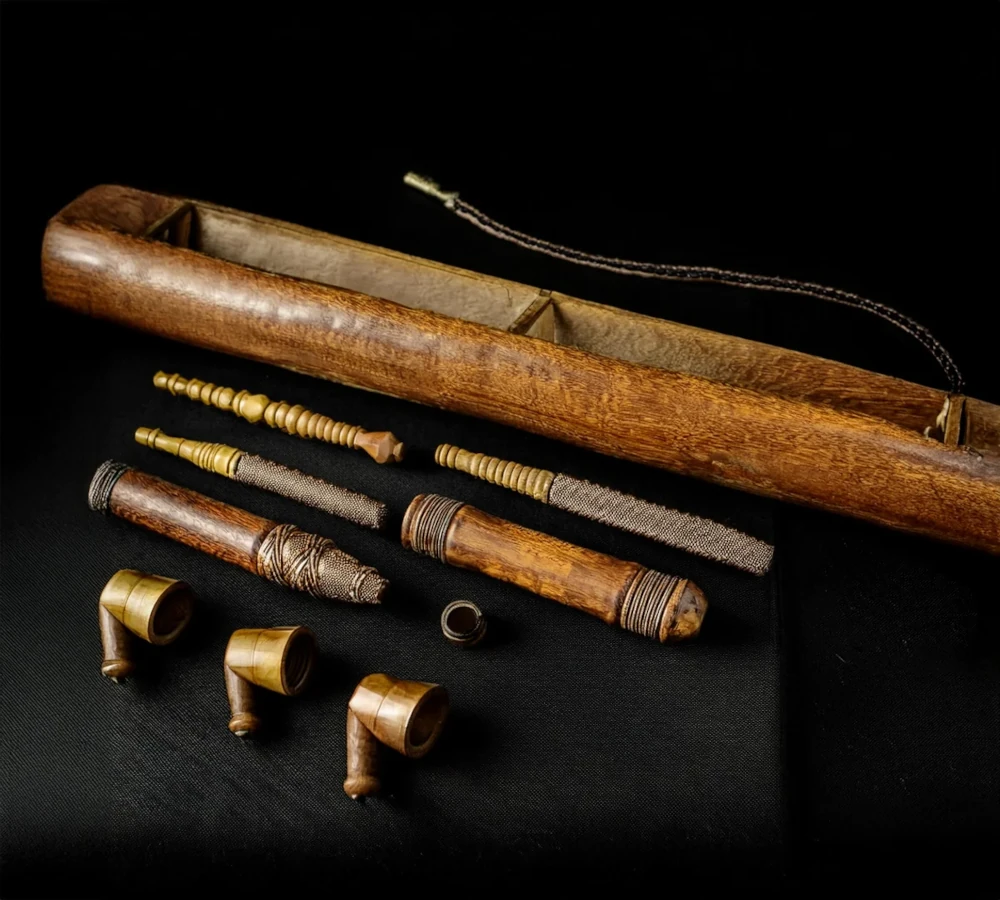
As we have seen, kief is a mixture of ground cannabis, sometimes mixed with a bit of taba. There is no formal extraction process involved other than blending the mixture before packing it into a sebsi (the pipe).
Hash, by contrast, is what has traditionally been referred to as “pollen” in Spain and Morocco: a dry sift extraction that is then pressed into a darker, more pliable and sticky substance. There are different techniques for pressing it, such as kneading it by hand to apply heat and pressure.
In the Hindu Kush region, they typically apply heat with coals while working it by hand or with mortars. In Morocco, a couscous steamer is often used to warm the sift until it’s ready to be pressed. Another method involves wrapping the sift in special cellophane plastic and pressing it by rolling a glass bottle filled with hot water over it.
Potency and quality can vary greatly, and it’s possible to get a highly concentrated, flavorful product. Home growers who make their own know exactly what we are talking about.
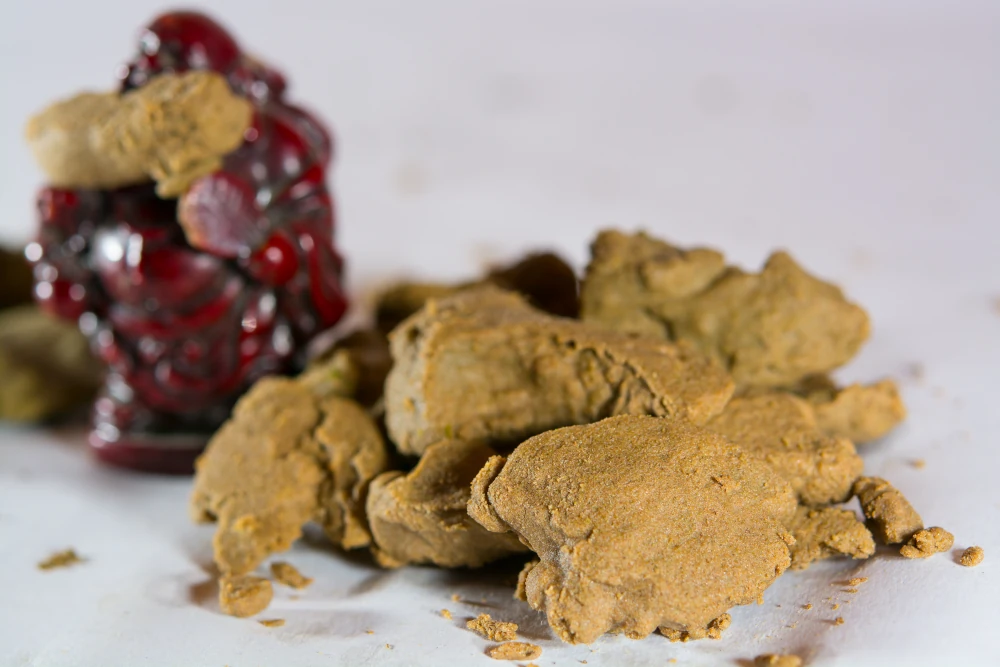
Hash is more compact than whole plants or unpressed sift, hence it takes less storage space. It is also easier to preserve, and the final product develops characteristics that are unique to traditional hash or “chocolate” (Moroccan slang for hash). Some smokers even prefer these specific qualities. It’s also true that for Moroccan producers, this became an important source of income, since it was easier to export to other countries.
How Is Kief Extracted from the Plant?
As we have seen through this article, kief is not really a product you can extract. It’s not the “pollen” that comes from sifting or beating dried cannabis plants.
All you need is to get your hands on some additive-free tobacco, ideally grown without pesticides and, if possible, with no nicotine (or you can use an herbal blend of your choice) and mix it with your buds. If you don’t want the mixture to be too strong, try using cannabis strains that are high in CBD and low in THC, such as Honey Peach Auto CBD® (SWS64) or Sweet Pure CBD® (SWS65), which contain almost no THC and produce a very mild, almost unnoticeable effect.
How to Store Kief?
If you’ve decided to prepare a pouch of kief, the best way to store it is the same way you would store cannabis. Use jars with airtight lids and keep them in a cool, dry place. You can also try some of the moisture control techniques featured in this article on how to properly store cannabis buds.
Ideal Strains for Making Kief
At Sweet Seeds®, we have developed strains with carefully selected genetics to help you achieve top-quality kief. If you are aiming for something similar to the kief found in the Rif region, your best bet is to focus on classic strains with a strong indica character. Some of the best options from our catalog include Sweet Skunk Auto® (SWS34), Bloody Skunk Auto® (SWS44), or photoperiod-dependent strains like S.A.D. Sweet Afgani Delicious S1® (SWS02). These strains offer distinct aromas and a relaxing, pleasurable effect very similar to what you would experience smoking kief in a traditional village from the Moroccan Rif.
Other strains we recommend for growing and making kief include Dark Devil Auto® (SWS38), Black Cream Auto® (SWS37), Purple Punch OG® (SWS93), and Black Jack® (SWS01). These strains deliver notes of incense and red fruits, while maintaining the original kief-like effect.
Now, if you are feeling inspired and creative, you can also go for more Sativa-leaning plants or strains with unique aromas, such as Gorilla Girl® (SWS74), San Fernando Lemon Kush® (SWS62), or the well-known Psicodelicia® (SWS07), which features a flavor reminiscent of Nepalese hash.
Whichever strain you choose for making kief, we recommend growing it with organic nutrients to enhance flavor and aroma.
How to Consume Kief?
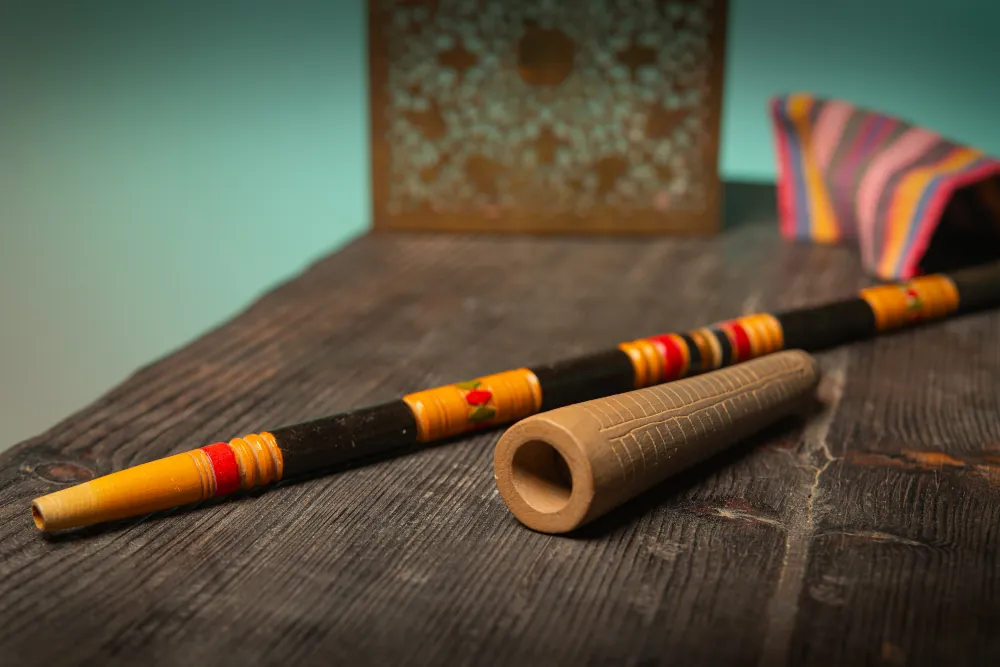
Traditionally, kief is consumed using a sebsi, a long, slender pipe made of wood or metal. Sometimes the sebsi is presented in a very simple form, while other times it is ornately decorated and colorful.
The sebsi has a very thin, elongated shape, with a small ceramic or metal bowl where the kief is placed. It differs from other pipes like the chillum in both size and shape, allowing the smoke to cool slightly before reaching your mouth and lungs. The small bowl also means smaller doses and milder effects.
If you still have questions or concerns, feel free to contact us through our social media channels on Facebook, X, Instagram, Telegram, or Bluesky, or join our exclusive online forum to ask us anything related to the world of cannabis.
At Sweet Seeds®, we strongly believe in sharing all the knowledge we have and ensuring that you can access our full catalog of high-quality feminized seeds, so you can always enjoy The Sweetest Experience.
Sweet Seeds S.L. is not responsible for any misuse of the information provided in this article. Growing Cannabis may constitute a criminal offense or administrative infraction; please check the Cannabis legislation applicable in your place of residence. Sweet Seeds S.L. does not, under any circumstances, intend to promote illegal practices.

Deputy Director of the Content and Image Department at Sweet Seeds®.
Articles by Jaypp (see all)
- How to Use Bat Guano in Cannabis Cultivation - 25 de February de 2026
- Growing Marijuana Indoors with LED Lights - 26 de September de 2025
- Differences Between Cannabis Indica and Cannabis Sativa - 26 de September de 2025