
Cart
There are no more items in your cart



Cannabis Defoliation: The Complete Guide
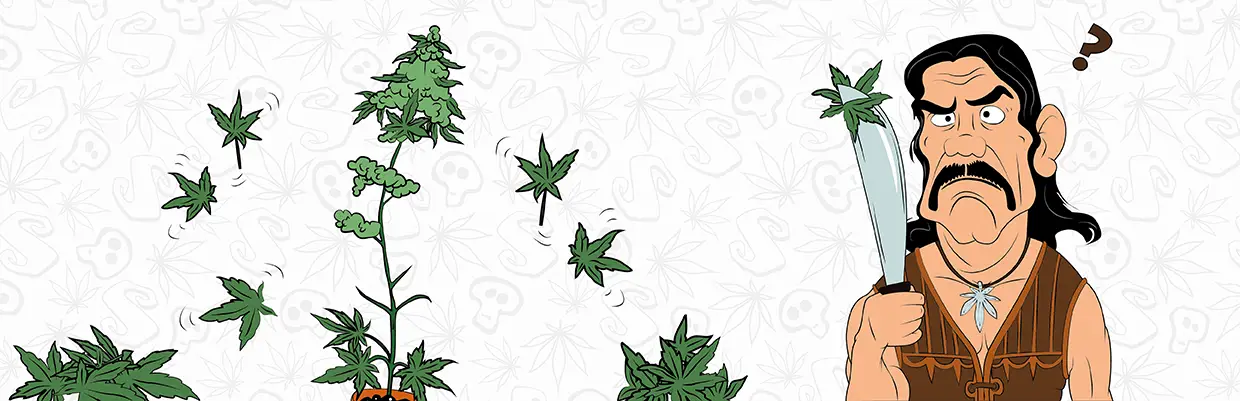
Cannabis defoliation is a somewhat controversial growing technique, not without risks, and it consists of selectively removing leaves from the cannabis plant in order to improve light distribution, airflow, and energy allocation.
It is not about cutting leaves indiscriminately, but about removing the leaves that block light from reaching the buds or those that consume the plant’s energy without contributing significantly to production.
When applied correctly, it promotes growth and yields, while also helping to combat pests and diseases. Sharpen your scissors and keep reading.
What Is Cannabis Defoliation?
When applied with knowledge and at the right time, cannabis defoliation becomes a very useful and easy-to-apply tool. You do not need many tools apart from a pair of scissors, and it will not take you too long to carry it out.
The reason defoliation is so important in cannabis growing is because of the benefits it provides. Let’s take a look at them.
Benefits of Defoliation in Cannabis Growing
At first glance, cutting leaves may seem counterproductive, but if it is applied at the right time and in the right amount, the defoliation technique can bring multiple benefits.
Not all leaves are suitable for pruning. In fact, the most common thing is to remove the leaves from the lower part of the plant, where they barely receive light, although sometimes upper leaves are also removed when they block the buds from receiving appropriate light.
It is a technique that has its critics and, as we said, it can be risky if it is done without control.
Improved Airflow and Mold Prevention
As plants grow, they develop a large mass of branches and leaves that serve to capture energy through photosynthesis. Some strains are especially leafy, particularly Indica strains, and this can become a problem in the grow space.
When this happens, air circulates poorly and becomes stagnant, causing moisture to build up on the leaves and buds. This directly affects the plant’s transpiration and the opening and closing of its stomata. In addition, plants become susceptible to attacks from opportunistic fungi such as powdery mildew, downy mildew, or botrytis.
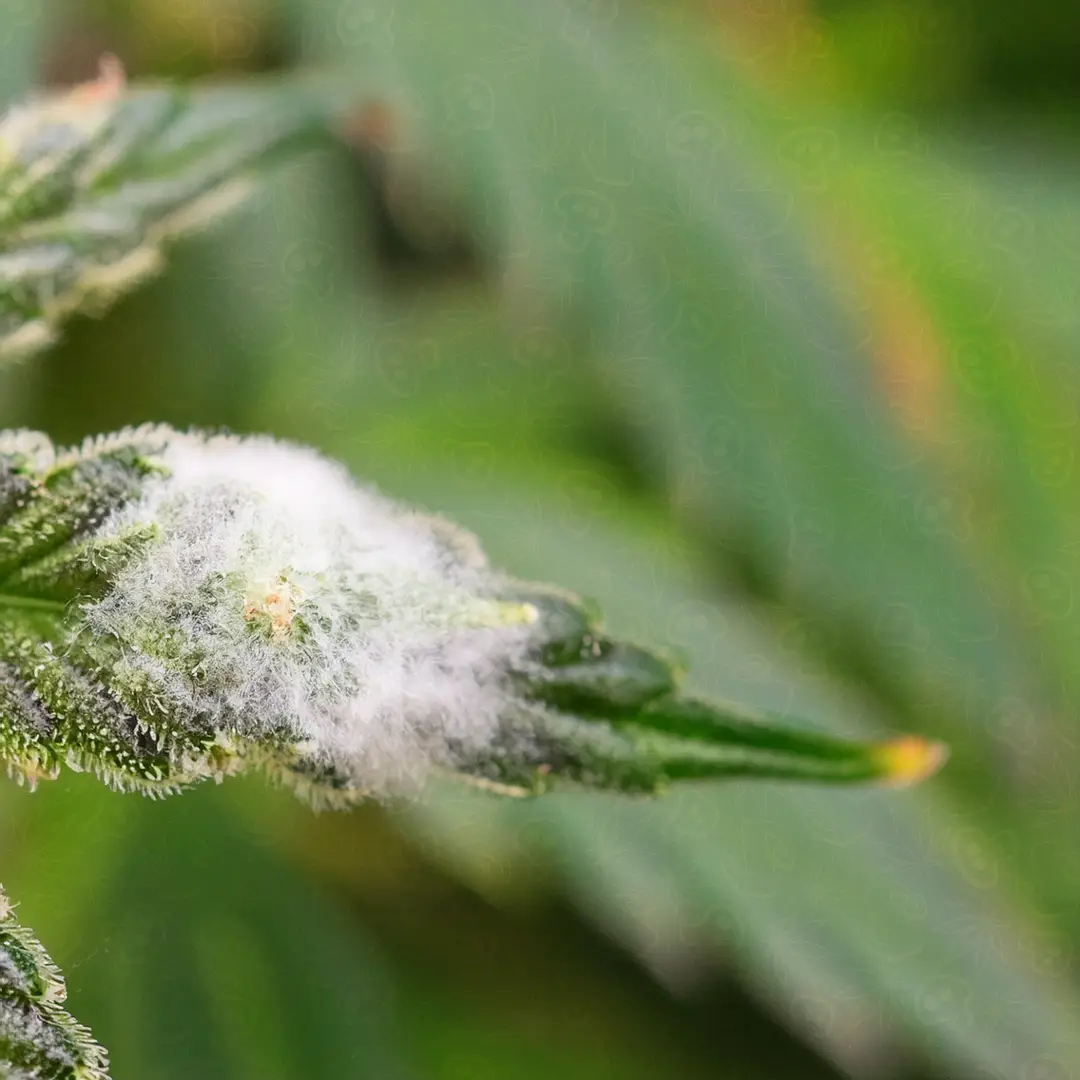
Another problem associated with poor circulation caused by excessive foliage is how easily insect pests such as thrips, whiteflies, or the feared spider mites can settle in, making them very difficult to eradicate.
Even when applying preventive treatments or insecticides, it can make it harder for them to penetrate the entire plant. Not to mention the convenience it brings when watering, allowing better access and better distribution of the nutrient solution throughout the substrate.
Increased Light Penetration
The larger leaves, which act like panels that receive and transform light into energy through photosynthesis, sometimes block light from reaching the lower areas of the plant where medium to large-sized buds could develop. If you remove some of them, you help that light penetrate, activating more flowering sites and preventing low-quality, small buds from forming in the lower zones.
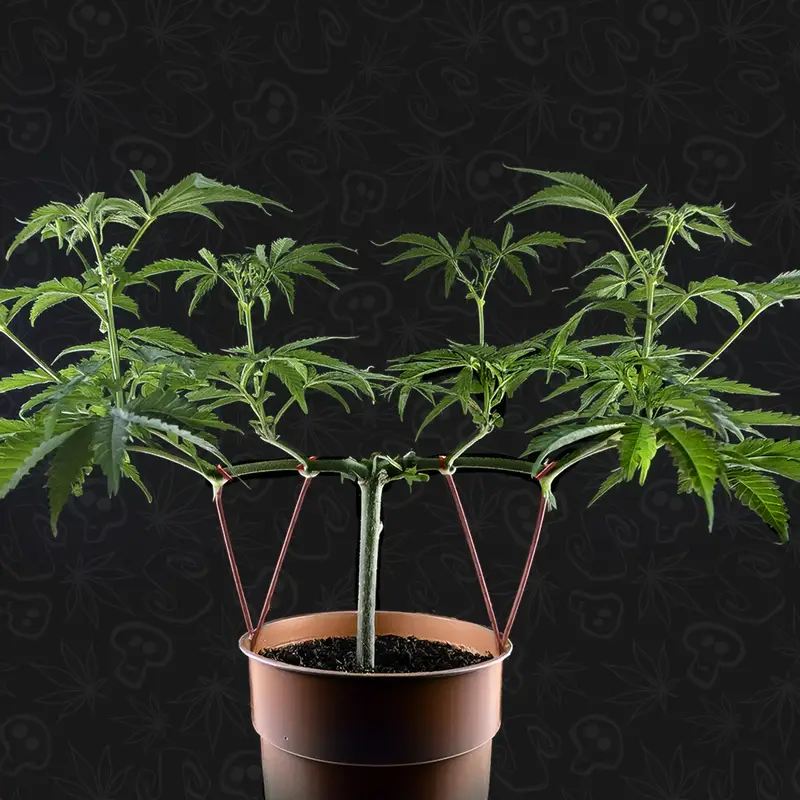
If you have also applied techniques such as Main-lining or a simple topping, this is a great help in allowing light to reach the most important areas more evenly, especially those most likely to form good-sized buds if properly exposed to light.
Optimizing the Plant’s Energy
Cannabis growers look for plants that produce dense, resinous flowers. If, through the selective defoliation of certain leaves, we can get the plant to save the nutrients and energy it spends on maintaining those leaves, it will use them to form larger buds.
That is why you should select only the leaves that do not receive enough light or those that are in worse condition or are older. The rest should continue fulfilling the main function they are meant for.
When Should You Defoliate Cannabis Plants?
We have already seen what cannabis defoliation is for. Now we will focus on answering how to defoliate cannabis, when it should be done and why.
Keep in mind that this technique is more commonly applied to indoor plants. Outdoor cannabis plants are more exposed to bad weather and pests, so this technique is not usually recommended. In addition, the movement of the sun allows light to reach almost all parts of the plant at some point during the day.
Ideally, you would apply one defoliation in the vegetative stage and another at the beginning of flowering. Although, if you are careful or willing to take the risk, a few more can be done.
Vegetative Stage
During the vegetative stage, the ideal approach is to carry out a light cannabis defoliation. At this stage, plants develop their root system along with their branch and leaf structure. During the first few days of life, the plant has very little foliage, and leaves appear as the plant grows and matures.
In order to encourage bushy and balanced growth, it is advisable to perform some leaf pruning around week 3 or 4 after the appearance of the cotyledons. Try removing leaves located at branching points and facing inward toward the plant, and combine this with techniques such as Lollipopping (removing branches and leaves from the lowest part of the plant), LST, or Topping to maximize the area that receives light and help the plant occupy more space.
A very useful tip: at this stage, do not remove more than 15% of the foliage. Otherwise, the plant’s growth will be negatively impacted. The idea is to improve and shape its structure and prepare the plant so that flowering is more efficient. We do not want to cause too much stress or make it spend too much energy healing its wounds.
Flowering Stage
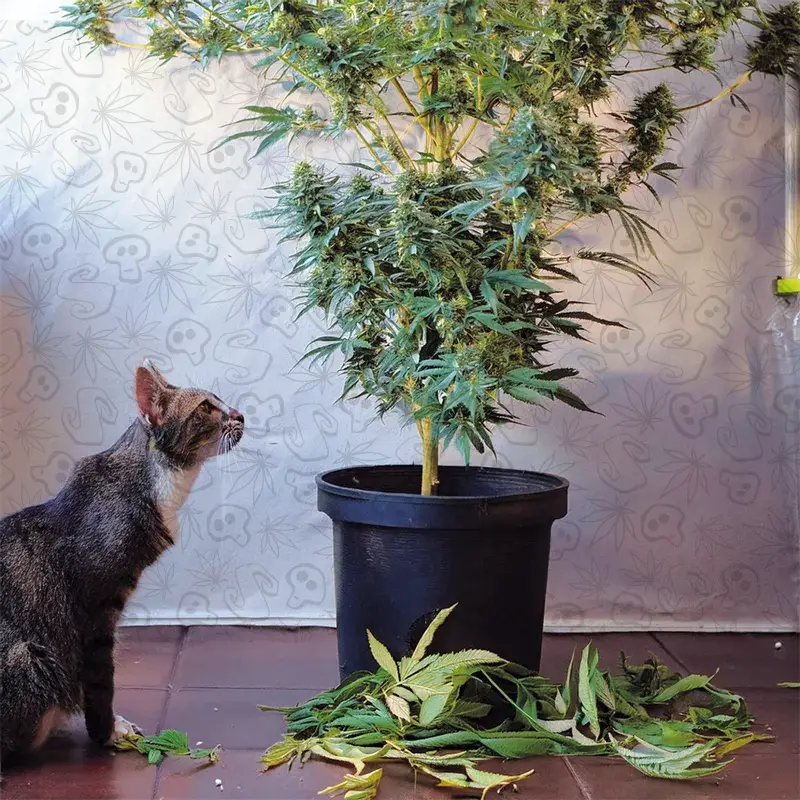
Ideally, you should carry out at least one pruning during the flowering stage, when the first buds appear.
Some growers apply what is known as the Schwazzing technique. According to writer and grower Joshua Haupt, who popularized this term, when a cannabis plant experiences stress after being stripped of a large part of its foliage, it produces a greater number of buds and larger ones.
This advanced method involves two heavy pruning sessions, removing a large number of fan leaves.
One would take place in the first week after the switch to the flowering stage. At this point, it is advisable to carry out an initial leaf removal before bud formation. You can remove those leaves that are touching the ground or are too shaded. You could even prune the weaker lower branches that receive the least light, which is commonly called Lollipopping or lower pruning.
Once flowering is underway and pistil formation starts to become noticeable, it is time to carry out another defoliation of the lower leaves that do not receive light or that are blocking the main colas. Focus on inner leaves that create excessive foliage and the resulting buildup of moisture. Take the opportunity to remove damaged or yellowing leaves as well.
It is up to you whether you want to apply such an aggressive technique or be more gentle with the plant and perform a lighter pruning instead. Our recommendation is not to overdo it and to test it on a few plants first, so you can later evaluate the pros and cons.
Finally, you can carry out one last defoliation before harvest to reduce transpiration and humidity slightly. Remove dry or yellowing leaves and leave the rest, since they will help fatten the buds with the nutrients they store.
Well-executed cannabis defoliation creates a small amount of stress that may also stimulate resin production in the buds.
As a general rule, do not remove more than 20–30% of the leaves in a single session if you do not want to push the plant into severe stress, which could cause hermaphroditism, delayed growth, or even a loss of yield.
Tools and Materials Needed for Successful Defoliation
The tools needed to carry out defoliation are basic: pruning scissors, gloves, and a little alcohol to disinfect the tools. Once you finish the session, clean the utensils and the work area thoroughly.
To help heal any wounds you create on the branches, you can use healing paste to speed up the recovery process and prevent the entry of pathogenic fungi.
If you are also going to do some LST (Low Stress Training) or Main-lining, you will need some string or wire to tie the branches down.
Step by Step: How to Defoliate Cannabis
Let’s recap the whole process here so you can carry out your own cannabis defoliation correctly.
Initial Inspection of the Plant
Inspect the candidate plants and look for areas with excessive foliage, especially the areas where leaves may end up blocking the light from reaching bud sites.
Remember that if the plant is not healthy or has some kind of nutrient imbalance, the result can be disastrous. Make sure it has strong stems, a bright green color, and a good root system. If the plant is underfed or has any disease, it will most likely not recover well from pruning.
It is also very important that you keep the plant well hydrated before carrying out any pruning.
Removing the Largest and Oldest Leaves
Once you have selected the plants you are going to defoliate, start with the largest fan leaves that are blocking the light. These are usually the oldest leaves and the ones growing from the main stem. Also remove any leaves that are dry, yellowing, or marked by insect bites.
The simplest and safest approach is to strip the plants of their lower leaves, so it may be best to start gaining confidence with this part of the plant and then move on to the rest.
Cleanup and Aftercare
Once you have finished cannabis defoliation, clean the space, disinfect the tools, and if you think it is necessary, apply healing paste to large wounds. This will help with recovery.
Finally, keep in mind that the plant must be properly fertilized in order to overcome the stress it has been subjected to and the energy it will consume in producing new growth. Make sure the plant receives proper nutrition after defoliation.
Common Mistakes When Defoliating Cannabis
One of the mistakes is carrying out very heavy defoliation on a plant that is not properly developed. It is always better to fall short than to go too far.
Other mistakes include improper cleaning of the tools, as they can transmit diseases to other plants, or applying the technique at a time that is not ideal.
Cannabis Defoliation: How Much Is Too Much?
Keep in mind that cannabis defoliation is a very invasive technique. If the plant loses all its foliage, it may not be able to recover. Take it slowly and do not cut more than 30% of the leaves in one go. If you see that the plant struggles to recover from its first pruning, it is best not to do more, or to do much less pruning the next time.
Finally, remember that the strains that respond best to cannabis defoliation are Indica strains. These tend to have more foliage than Sativa strains. Therefore, it is not advisable to apply it to Sativa strains.
Find the Best Seeds to Maximize Your Cannabis Growing Performance at Sweet Seeds®!
If you are already practicing cannabis defoliation to improve the health and performance of your plants, why not take your grow even further with quality seeds from the Sweet Seeds® genetic collection?
Our wide selection of top-quality strains, both autoflowering and photoperiod-dependent, is designed to deliver robust and productive plants, perfect for those looking to achieve the best results in every harvest.
Explore our vast genetic collection and choose the seeds that best suit your growing style.
Sweet Seeds S.L. is not responsible for any misuse of the information provided in this article. Growing Cannabis may constitute a criminal offense or administrative infraction; please check the Cannabis legislation applicable in your place of residence. Sweet Seeds S.L. does not, under any circumstances, intend to promote illegal practices.
Deputy Director of the Content and Image Department at Sweet Seeds®.
Articles by Jaypp (see all)
- How to Germinate Marijuana Seeds: Basic Guide - 8 de October de 2026
- How to Fertilize Your Cannabis Plants Easily - 16 de September de 2026
- CBD for Osteoarthritis: How Can It Help? - 16 de September de 2026