
Cart
There are no more items in your cart



How to Clone Cannabis: A Step-by-Step Guide
Just like learning how to germinate seeds or transplant plants, knowing how to make cannabis clones is essential for any home cannabis grower. Clones, or cannabis cuttings, are small sections of branches taken from another plant that allow you to propagate and replicate that same plant while preserving all its genetic characteristics.
As you will see throughout this article, this technique offers numerous benefits when carried out correctly, which is why it is so popular among cannabis growers. Besides being practical, it also has a scientific side that, combined with the passion that characterizes growers, makes this an exciting part of cannabis growing..
Although cloning weed plants requires meticulous attention during the early stages, the benefits far outweigh the challenges, especially for growers looking for consistency and efficiency. As an expert might say: “A good clone is like a perfect photocopy… but with roots.”
Benefits of Making Cannabis Clones
Let us take a closer look at the many benefits of having cannabis clones available for your next grow.
Genetic Uniformity
Cannabis clones or cuttings are genetic copies of the mother plant they are taken from, for better or worse. If the “donor” plant has a disease or genetic flaw, such as a strong tendency toward hermaphroditism, this may also be passed on to the clones. For this reason, when growers take cannabis cuttings, they usually select special plants with positive characteristics they want to preserve.
Seeds, on the other hand, can produce different phenotypes. This can sometimes be an advantage, since plants from the same strain will be similar but may display certain differences that can enrich the harvest. This also gives us the opportunity to select a particularly special plant that stands out from the rest.
Once you have selected the ideal plant with all the desired characteristics—flavor, flowering time, yield, effects, and disease resistance—it can be chosen as the mother plant for future clones, ensuring genetic uniformity.
Shorter Growing Time
It is true that the overall growing time can be reduced, although this statement requires some clarification.
A cannabis clone inherits the physiological age of the mother plant, which means it can be induced to flower sooner than a plant grown from seed.
Seed-grown plants need to reach physiological maturity after germination before they can flower properly and produce a good yield. This process may take around 20 days—approximately 7 days for germination and 14 days as a seedling—after which it is advisable to give them a similar amount of time in vegetative growth. Cannabis clones, on the other hand, can be moved into flowering after their rooting stage, which may take around 10 days, followed by approximately two weeks of vegetative growth. However, every genetic line is different, and some plants grown from seed may require less vegetative time before being switched to flowering.
Another advantage is that, when you already know the exact flowering time, how much the plant stretches during flowering, and the amount of fertilizer it can tolerate, you can fine-tune your schedule to achieve almost perfectly timed grows, including flushing and harvesting exactly when needed. Imagine, for example, an indoor grow before summer that must be finished before the hot weather arrives. Knowing the plant’s full history allows you to anticipate its development and plan ahead.
But not everything that glitters is resin, and setbacks can always occur. Success depends on factors such as rooting performance, the health and age of the mother plant, the growing technique used, and the genetics involved. It should also be noted that clones may not always show the same vigor as plants grown from seed.
Guaranteed Replication of Characteristics
Now that we have looked at the benefits of making cannabis clones, let us see what we need to carry out the process successfully.
Materials Needed to Make Cannabis Clones
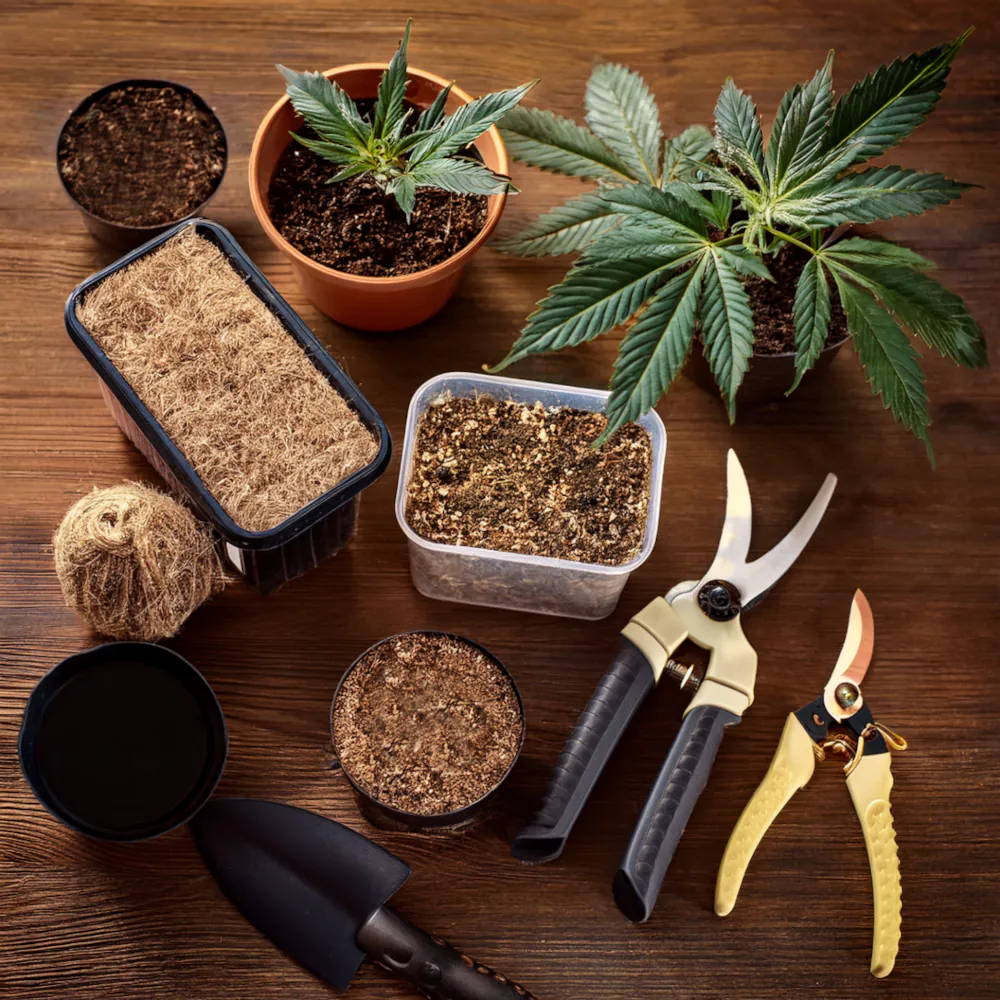
Before you start cloning weed plants, it is worth going over everything you will need to root cannabis cuttings successfully.
Pruning Scissors
Get a pair of sharp pruning scissors to cut branches from the plants. It is important that they are very sharp because you need to make clean, angled cuts. Otherwise, you could crush the stems, leaving the cutting vulnerable to fungal infection and potentially causing it to die.
It is also crucial to disinfect the scissors with isopropyl alcohol before making any cuts, as diseases could otherwise be transmitted to the young clones. We even recommend disinfecting them each time you move from one plant to another if you are taking cuttings from several mother plants.
You could also use a very sharp blade, although it is somewhat less convenient to work with and also more dangerous.
Rooting Hormones
Rooting hormones for cuttings are based on chemical compounds that stimulate root development, accelerating vegetative propagation. Their main active ingredients are auxins, usually synthetic ones such as indole-3-butyric acid (IBA) or naphthaleneacetic acid (NAA), which mimic the action of naturally occurring auxins produced by plants.
They promote cell division and differentiation in the cutting tissue, initiating the formation of adventitious roots. They also provide additional support by stimulating activity in the cutting area, improving the cutting’s chances of survival.
They are available in several forms, including powders, gels, and liquids.
Some gardeners use homemade remedies such as willow water, which contains salicylic acid, cinnamon, or lentil water as natural alternatives. You can even root cannabis cuttings in plain water without adding anything, although the process will take longer.
Suitable Growing Medium
You will need to choose a growing medium in which to root the cannabis clones. It should be lightweight and well aerated while still retaining sufficient moisture. Options include peat or coco coir mixed with some perlite, pure coco coir, perlite on its own, rockwool, or Jiffy pellets.
These are among the most commonly used and readily available options.
Controlled Environment
We recommend using a small propagation dome or mini greenhouse—or making one yourself if you are handy—in which to place the cuttings. It should be able to maintain high humidity and be transparent to allow light through. The light should preferably have a blue-rich spectrum and relatively low intensity; fluorescent lights or LEDs are ideal.
The propagator should also allow for gentle ventilation to maintain slight air circulation, helping prevent mold and disease. It should be made from a material that is easy to clean, such as plastic, since it needs to be kept as clean and disinfected as possible. We also recommend using a horticultural heat mat to keep the base of the cuttings at an ideal temperature of around 24 °C and encourage root development.
How to Select the Ideal Mother Plant
A mother plant is one that is kept in the vegetative stage under an 18-hour light cycle to serve as a source of cannabis clones.
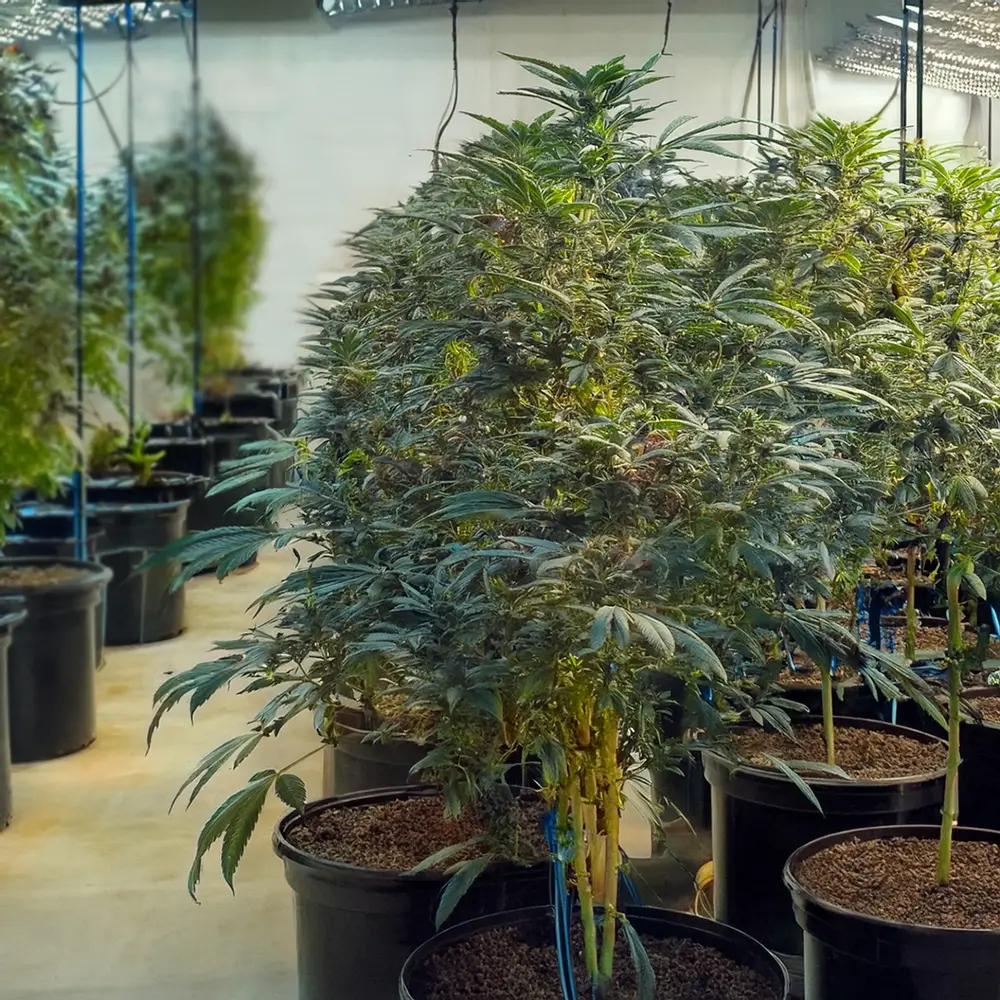
When selecting a mother plant, several important characteristics should be taken into account. On the one hand, there are desirable traits we want to preserve: aroma and flavor, resin production, bud structure, high yields, type of effects, or a particular cannabinoid profile. On the other hand, a good mother plant should be vigorous, free from diseases and pests, and show good resistance to pests and stress.
Step-by-Step: How to Make Cannabis Clones
Now we come to the practical part. In this section, we provide a detailed guide on how to cut, prepare, and plant cannabis clones, ensuring the best possible conditions for successful rooting.
Preparing the Mother Plant
A well-cared-for mother plant is the foundation for producing vigorous clones. To achieve this, focus on keeping it healthy, properly nourished, and under suitable environmental conditions. Maintain an 18-hour light and 6-hour dark cycle. Use a blue-rich light spectrum to encourage vegetative growth and make sure the plant receives proper nutrition.
It is important to top the plant beforehand to encourage lateral branch growth, since these branches will provide future cuttings. Shape the plant using LST (Low Stress Training) to improve light distribution and inspect it for pests. If necessary, apply a preventive treatment or insecticide.
Try to water the plant shortly before taking the clones to ensure that the branches are turgid and well hydrated.
Taking and Preparing the Cutting
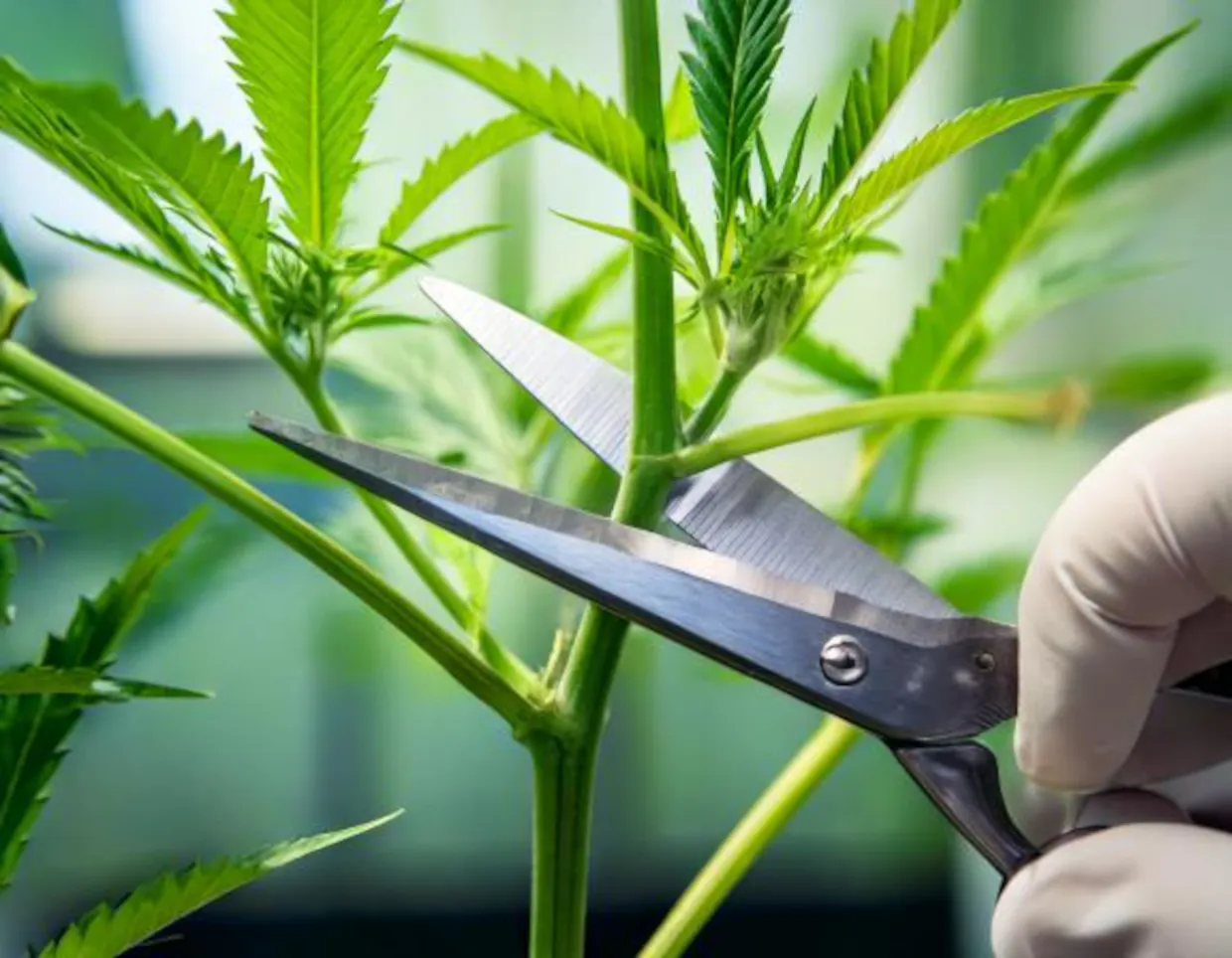
Put on gloves and, using sterilized scissors, cut branches around 10 cm long or more from the lower part of the plant. Make a clean, angled cut at approximately 45° just below a node, while trying to leave at least one additional node above it, together with the growing tip and leaves. Trim the tips of the leaves to reduce dehydration of the clones and then move on to the next step.
If you are taking the cuttings in batches, you can place them in a glass of water until you are ready to apply the rooting hormones. If too much time passes before placing a cutting in water, make a fresh cut, as an air bubble may have entered the stem and could cause the clone to wilt.
Using Rooting Hormones
Once the cutting is ready, coat its base with rooting hormone before inserting it into the growing medium. Check the product instructions, as each brand may have a different application method.
Excessive rooting hormone can inhibit growth, so always follow the recommended dosage. Wearing gloves is advisable to avoid skin contact.
Planting and Initial Care
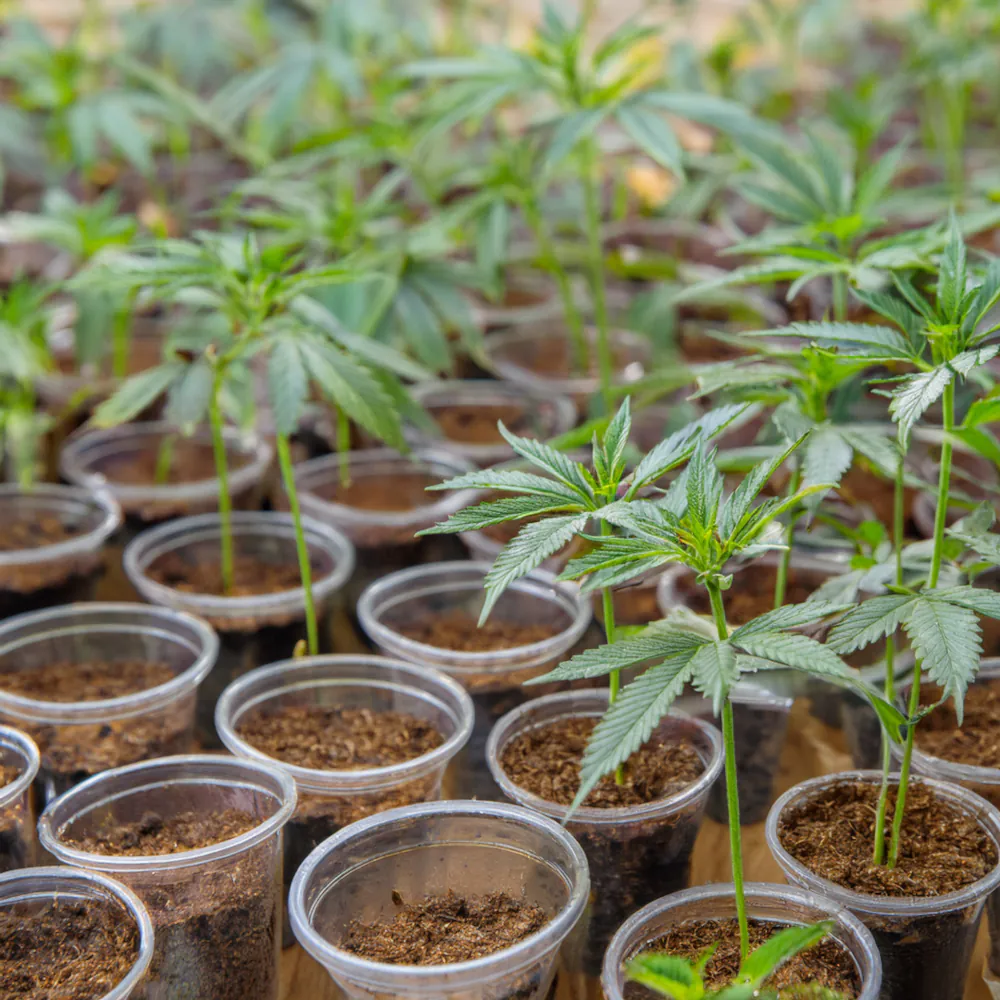
With the growing medium already moistened, insert the hormone-coated base of the cutting deeply enough to bury at least one node. The more nodes that are buried, the greater the potential for successful rooting.
Make sure the cuttings remain stable by gently pressing the growing medium around the stems, then place them inside the propagation dome with the vents completely closed. Put them under the light immediately and place the propagator on top of the heat mat.
Care and Maintenance of Cannabis Clones
Now it is time to care for your cannabis clones. Keep them in a warm environment between 20 and 26 °C, providing 18 to 24 hours of light per day. Temperatures above this range can be harmful to the cuttings. Maintain high humidity and keep the ventilation closed during the first 24 hours. After this period, open the propagator for 10 to 30 minutes each day to help prevent mold.
Over the following days, gradually open the ventilation vents further until they are completely open after around 7 to 10 days. If you notice the cuttings beginning to wilt, partially close the vents again to increase humidity.
Do not mist the leaves initially. Instead, make sure the growing medium never dries out, which will also help maintain humidity inside the propagator. As the days pass, you may notice the leaves gradually losing color and, in some cases, turning yellow. At this point, you can apply a foliar fertilizer, since the cutting does not yet have a developed root system from which to obtain nutrients. It can also be beneficial to provide the growing medium with nutrients formulated for vegetative growth. Remove any dry leaves to help prevent mold.
Common Problems and How to Solve Them
The most common problems that can occur when cloning weed plants include:
- Wilting: This usually occurs because of insufficient humidity or excessive heat. Reduce ventilation and maintain high humidity while still allowing fresh air into the propagator every day. Lower the temperature if necessary.
- Rot: This can occur when the air inside the propagator is not renewed while humidity remains constantly high. To prevent it, open the propagator every day for around 30 minutes. Remove leaves as they dry out, since dead plant material can become a source of rot.
- Failure to Root: If roots fail to develop, the cutting will eventually die. Be patient and remain attentive. Too little—or too much—rooting hormone may be one possible cause. Temperatures below 18 °C can also slow root development.
When to Transplant Rooted Clones
After approximately 10 days, the cuttings should be able to remain upright with the propagator open for more than one hour, and at some point you should begin to see roots emerging. Once this happens, they can be transplanted into a pot containing a good-quality growing medium.
Do this very carefully to avoid damaging the roots, and enjoy the results of a job well done!
Explore Our Cannabis Seed Catalog Today!
We invite you to browse the cannabis seeds available in the Sweet Seeds® online catalog, expand your collection with high-quality genetics, and select the best plants for your future growing projects.
Thank you for reading!
Sweet Seeds S.L. is not responsible for any misuse of the information provided in this article. Growing Cannabis may constitute a criminal offense or administrative infraction; please check the Cannabis legislation applicable in your place of residence. Sweet Seeds S.L. does not, under any circumstances, intend to promote illegal practices.

Deputy Director of the Content and Image Department at Sweet Seeds®.
Articles by Jaypp (see all)
- How to Germinate Marijuana Seeds: Basic Guide - 8 de October de 2026
- How to Fertilize Your Cannabis Plants Easily - 16 de September de 2026
- CBD for Osteoarthritis: How Can It Help? - 16 de September de 2026