
Cart
There are no more items in your cart



How to Decarboxylate Cannabis: A Step-by-Step Guide
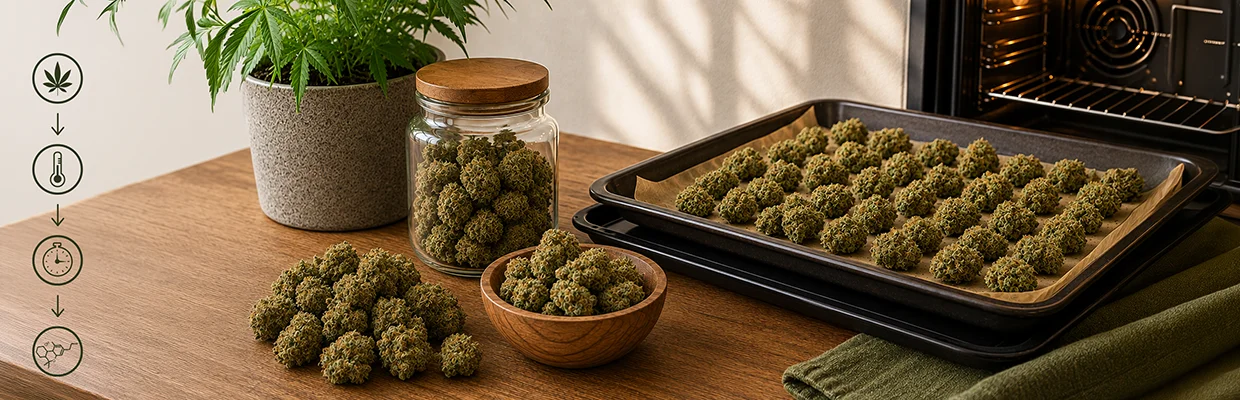
In essence, cannabis decarboxylation is the process by which cannabinoids in their acidic forms (for example, THCA and CBDA) are converted into their neutral and more “active” forms (THC and CBD), usually through heat. Without this conversion, marijuana is unlikely to produce the expected psychoactive effect, which is why eating a raw bud usually produces little or no high.
This is why learning how to decarboxylate correctly is so important: if it is done poorly, many users, both recreational and medicinal, will not get the full benefits.
For this reason, decarboxylating marijuana is one of the key steps for cannabis consumption to be effective, especially for people who do not smoke and instead use edibles, tinctures, oils, or homemade extracts. People who smoke or vape buds rarely think about this important process because, in practice, decarboxylation occurs automatically when the cannabis is heated to certain temperatures.
By contrast, if cannabis is consumed orally, this step becomes essential: without proper decarboxylation, the effects are usually weaker and less predictable. In this guide from Sweet Seeds®, you will learn what decarboxylation is, why it matters, and the most practical methods for doing it properly, including recommended times and temperatures, as well as common mistakes and problems that may arise and how to avoid them so your homemade preparations deliver excellent results. Ready to keep reading?
What Is Marijuana Decarboxylation?
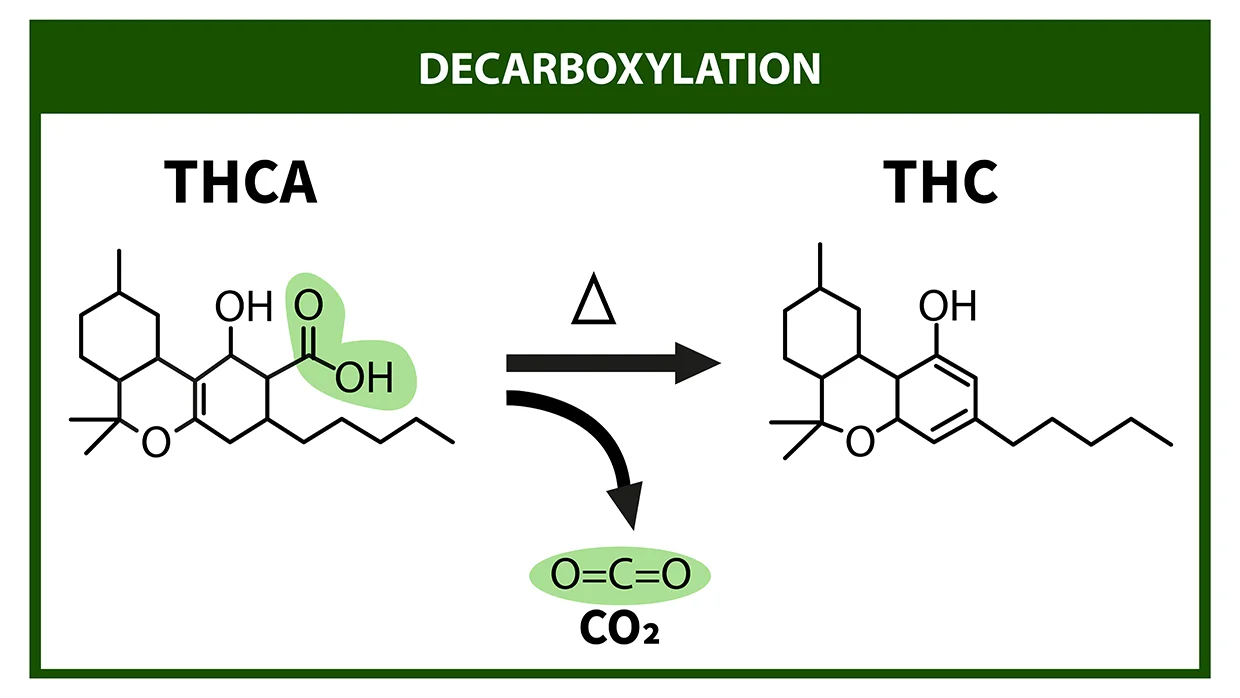
Marijuana decarboxylation is a chemical reaction that occurs when the acidic cannabinoids present in the plant, which are concentrated mainly in the trichomes on the flowers, lose their carboxyl group (–COOH) and release carbon dioxide (CO₂). This molecular change, usually triggered by heat, converts compounds such as THCA and CBDA into THC and CBD.
From that point on, these cannabinoids become biologically active and can interact with the human endocannabinoid system (ECS).
In marijuana, and also in kief or hash, most cannabinoids naturally occur in their acidic forms. In these forms, compounds such as THCA (tetrahydrocannabinolic acid), CBDA (cannabidiolic acid), and CBGA (cannabigerolic acid), among others, are commonly found.
In these forms, however, they do not produce the typical effects associated with marijuana and do not get you high. They only become activated after being converted into THC, CBD, or CBG through decarboxylation.
In these forms, acidic cannabinoids do not produce the typical “high” associated with marijuana. THCA must become THC through decarboxylation. By contrast, CBD and CBG are non-intoxicating but biologically active: decarboxylation converts CBDA → CBD and CBGA → CBG, changing their effect profiles.
Decarboxylation vs. Cannabinoid Activation
To be precise, it is useful to distinguish decarboxylation from activation. The first is the chemical process: loss of the carboxyl group (–COOH) and release of CO₂. The second is the practical consequence of that conversion: cannabinoids move into forms that generally show greater biological activity and a different effect profile.
A clear example is smoking or vaping marijuana: in this case, decarboxylation occurs quickly because the material is heated to high temperatures within seconds. By contrast, if marijuana is consumed raw without applying heat, most cannabinoids remain in their acidic forms and the typical psychoactive effect is usually absent or very limited.
Why Is Decarboxylation Important?
By now, we can see why decarboxylation is so important, since this process is where much of the magic of cannabis happens. Without it, cannabis does not reveal its full potential. It is particularly important for preparations that involve no combustion or vaporization.
To recap, decarboxylating marijuana is essential for:
- Cannabis oils
- Cannabis butter
- Edibles (cookies, brownies, chocolates, etc.)
- Alcohol-based tinctures
- Capsules and other preparations for therapeutic use
Without decarboxylation, these products would contain mainly THCA and CBDA (and other acidic cannabinoids), whose effects are very different and, when it comes to getting high, much less potent.
How Decarboxylation Enhances the Effects of Marijuana
When marijuana is properly decarboxylated:
- The bioavailability of THC and CBD increases
- The effects become more predictable
- Less product is needed to feel the effects
- The cannabis is used more efficiently
Keep in mind that proper decarboxylation gives you greater control over the experience, which is especially useful with edibles, where the effects are often more intense and longer-lasting than with inhalation.
Common Methods for Decarboxylating Marijuana
Let us look at the most widely used methods for successful decarboxylation. Each has its advantages and disadvantages, so choose the one that best suits your preferences or the equipment you have available.
Oven Decarboxylation
Who does not have an oven at home? This method is reliable rather than fast, which is why it is the most popular of all.
Its main advantages are:
- Easy to do at home
- No special equipment required
- Allows larger quantities to be processed in a relatively short time
Some disadvantages:
- Partial terpene loss through evaporation
- Dependence on oven accuracy. A difference of just a few degrees can matter
Decarboxylation in a Frying Pan or Saucepan
Decarboxylation in a saucepan over direct heat is very simple and does not require an oven. Simply spread out the ground marijuana and heat it gently. The main drawback of this technique is that it is less precise.
With direct heat, the temperature is less uniform, which means the cannabis must be stirred constantly to avoid hot spots. It is also more difficult to control the temperature, increasing the risk of overheating and degrading the material, with the resulting cannabinoid degradation and terpene loss.
In short, it is a quick and accessible option, but the least recommended if you are looking for efficiency.
Decarboxylation with Specialized Devices
There are other methods for decarboxylating in a more controlled way. These techniques allow better control over temperature and time and often produce more consistent results than an oven or direct heat. In addition, using more stable heat (often in closed containers) makes it easier to reduce terpene loss and preserve the material’s profile.
One highly controlled method is sous-vide cooking, which is commonly used in the kitchen for long cooking times at stable temperatures. Place the ground marijuana in a heat-safe bag, seal it (preferably double-bagged to prevent leaks), and submerge it in the water “bath” at the chosen temperature for the desired time. This allows the cannabinoids to decarboxylate fairly evenly while reducing terpene loss to the surrounding air.
A similar method is to use a glass jar with a lid, leaving it slightly loose or using a system that can tolerate pressure, since decarboxylation releases CO₂ and can build pressure inside an airtight jar. Place the ground marijuana inside and put the jar in the oven at the appropriate temperature. Make sure the container is heat-resistant (oven-safe or canning glass) and let it cool before opening it.
There are also silicone products with built-in thermometers that can be placed in the oven and often produce very good results.
These devices are somewhat more expensive and usually have a lower capacity, but they can be worthwhile in the long run. Besides preserving the material better, these methods greatly reduce odor during the process by using a closed or semi-sealed container, although they do not always eliminate it completely.
Step-by-Step: How to Decarboxylate Marijuana in the Oven
Let us take a detailed look at the method preferred by many consumers.
Ideal Temperature and Time
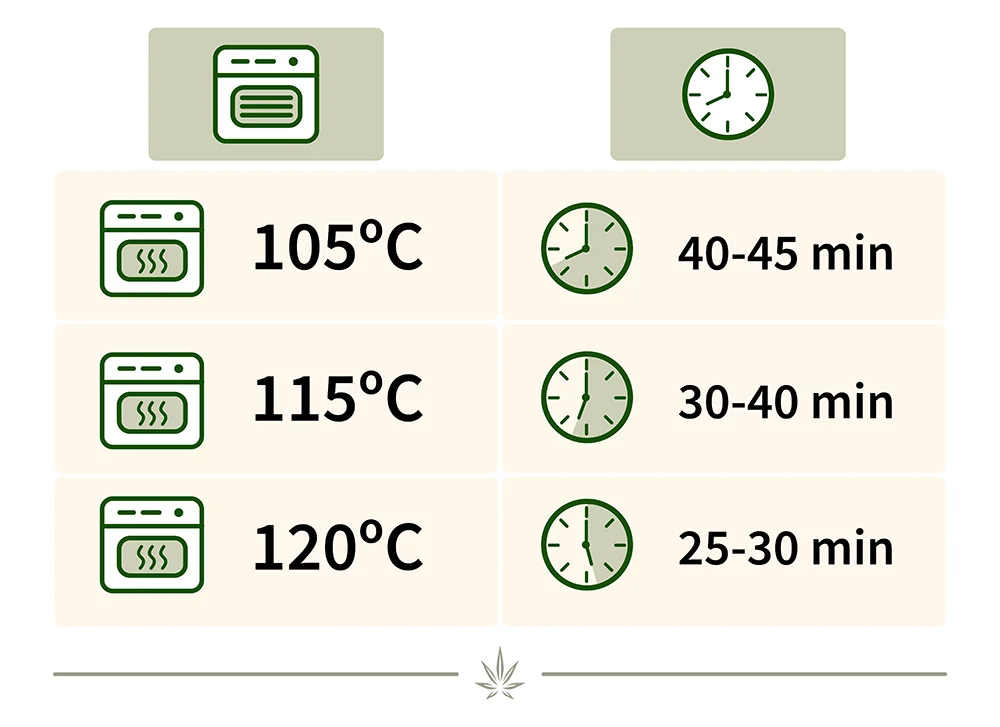
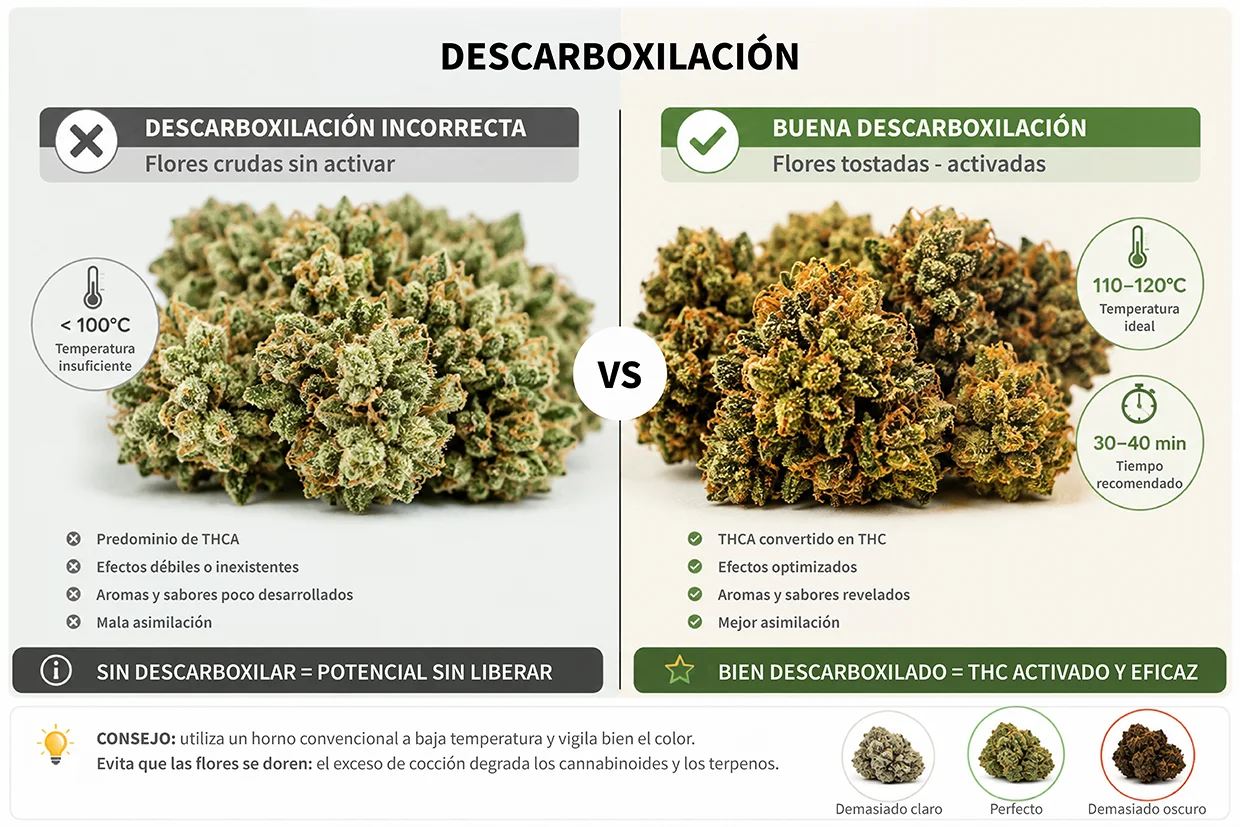
For proper decarboxylation of THCA, a constant and even temperature should be maintained within a range of 105 °C to 120 °C. A lower temperature will slow the process, while a higher one may eventually degrade some THC into CBN and volatilize more terpenes.
There is a balance between time and temperature: the higher the temperature, the shorter the time, and vice versa. As a general rule, at a temperature of 110–115 °C, the cannabis can remain in the oven for around 35 minutes. That is usually sufficient.
Preparation: Breaking Up and Covering the Cannabis
Before turning on the oven, here are a few important tips:
- Use dry, cured buds. Keep in mind that marijuana undergoes natural decarboxylation over time, so using cured cannabis can help.
- Break it up lightly by hand or with a grinder. Avoid grinding it too finely.
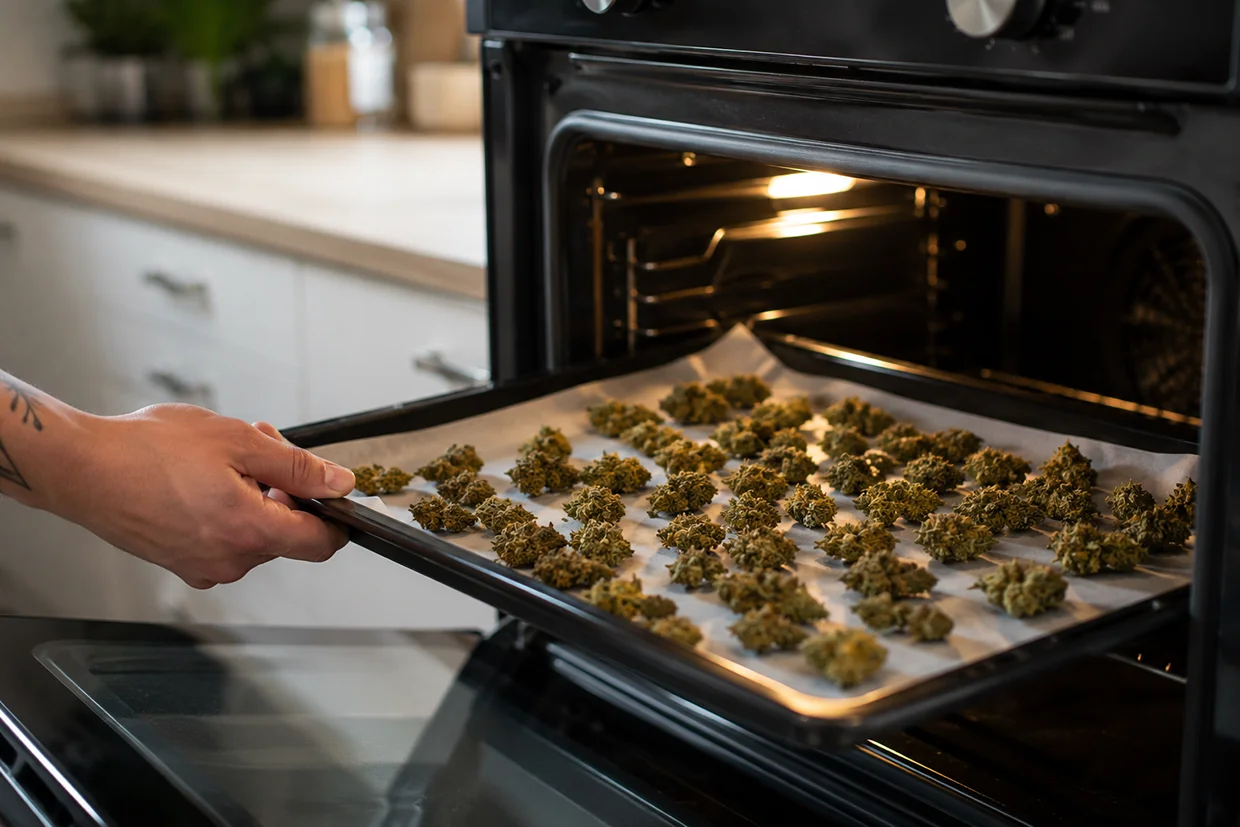
- Spread the cannabis evenly on a baking tray lined with parchment paper, without piling it up.
- Optionally, cover it loosely with aluminum foil to help reduce terpene loss.
During the process, it is recommended to stir the material gently once to ensure even decarboxylation.
How Long Does It Take to Decarboxylate Marijuana?
There is no fixed rule, but the starting material, its condition, and the color it takes by the end of the process can help guide you. If it ends up looking toasted, it has been exposed to too much time or heat. It should be dry and slightly duller in color.
If the buds contain too much moisture, the process will take a little longer. If the material has not been broken up much and some buds remain whole, the process will also take longer. Logically, at a higher temperature (120 °C), less time is required. To preserve terpenes, a lower temperature of 105 °C for 40 minutes or slightly longer is recommended.
As a general guide:
- At 110 °C → 40–45 minutes
- At 115 °C → 30–40 minutes
- At 120 °C → 25–30 minutes
For CBD, the process may require slightly more time because CBDA is somewhat more thermally stable.
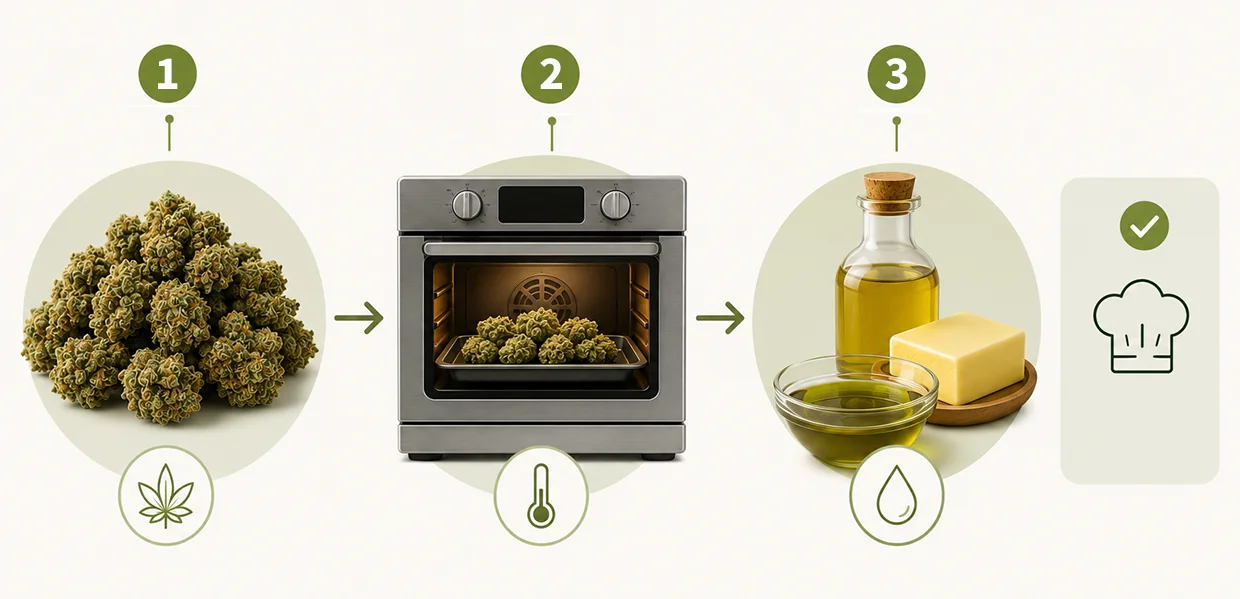
Decarboxylation for Making Oils, Edibles, and Tinctures
As we have seen, if you are preparing any of these products, it is essential to decarboxylate marijuana beforehand. You might think that the heat used during cooking is enough, but it is better not to leave the process to chance and to decarboxylate the cannabis in advance.
A very useful trick after decarboxylation for reducing the grassy flavor associated with chlorophyll is to blanch the cannabis very briefly—around 5 to 10 seconds—in boiling water and then transfer it to ice water. This can give your preparations a better flavor.
Preparing Cannabis Oil: Step by Step
The first step is to decarboxylate marijuana. Once the marijuana has cooled, place it in the fat you plan to use, such as olive oil, coconut oil, or butter.
Place it in a saucepan over low heat (you can also use cooking bags or sealed jars) and maintain a constant temperature between 60 and 90 °C for several hours. The easiest option is to use water as a cooking medium, since it helps prevent the temperature from becoming too high.
Once enough time has passed, strain it thoroughly using a sieve and a filter that catches the remaining plant material. Once cooled, it should become solid or oilier, depending on the fat used.
How to Make Edibles with Decarboxylated Marijuana
Once the marijuana has been decarboxylated, it is a good idea to follow the step described above to reduce the unpleasant chlorophyll flavor. You can then use the butter, milk, or oil you have prepared in your recipes.
Be sure to measure the proportions correctly, because using too much can make the effects overly intense. Once you know the potency of your preparation, you can use that information for future recipes.
If you want a useful formula for calculating how much marijuana you need for a given number of servings, follow this example:
20 servings, using marijuana with 15% THC.
- 5 mg per serving
- Total required: 100 mg THC
With 1 gram of properly prepared marijuana, you can make 20 mild doses.
Common Mistakes When Decarboxylating Marijuana and How to Avoid Them
Even a process that seems this simple can fail if it is not carefully controlled.
Using the Wrong Temperature
Temperatures that are too high can degrade cannabinoids and volatilize terpenes, reducing potency, aroma, and flavor and resulting in a poorer final product.
At the other extreme, if the temperature is too low (or the time is insufficient), decarboxylation may remain incomplete: there will be less neutral THC/CBD and the effects will tend to be weaker and less consistent.
Decarboxylating Marijuana for Too Long
Excessive time promotes oxidation and can increase cannabinoid degradation: some THC may be lost and, under certain conditions, may tend to convert into compounds such as CBN, resulting in lower potency and a more subdued effect.
This is why the process should not be extended longer than necessary. Keep an eye on the material: if the cannabis becomes very dark or develops a pronounced brown color (and clearly loses its aroma), this is usually a sign of overheating or excessive time.
How Much THC and CBD Are Activated Through Decarboxylation?
Keep in mind that home decarboxylation is rarely 100% efficient, even when time and temperature are carefully controlled. There may always be some incomplete conversion as well as losses through evaporation or degradation. In addition, the presence of oxygen and light promotes the oxidation of THC into CBN during heating. Under optimal conditions, it is estimated that around 70–90% of the potential THC is typically activated.
CBD generally falls within a similar range, so this should be taken into account when preparing your products.
The factors that most influence the final yield (and overall loss) are:
- Genetics/strain (initial cannabinoid and terpene profile)
- Condition of the material (drying/curing, moisture, storage)
- Method and actual conditions (temperature stability, oxygen, container)
Visit the Sweet Seeds® Catalog to Find the Best Strains
Naturally, to preserve as many cannabinoids and terpenes as possible in a preparation, it is always best to start with high-quality genetics. In the Sweet Seeds® catalog, you will find autoflowering strains, photoperiod-dependent strains and CBD-rich strains that are ideal for decarboxylation and homemade preparations.
The grower’s skill also matters, as does choosing well-grown, resinous, properly cured flowers, since this will make it much easier to achieve more satisfying final results. If you have any questions, visit our exclusive forum, where our cannabis growing experts can help you choose the best strains.
Sweet Seeds S.L. is not responsible for any misuse of the information contained in this article. Cannabis growing may constitute a criminal offense or an administrative violation; please consult the laws regarding cannabis in your place of residence. Sweet Seeds S.L. does not intend, under any circumstances, to encourage illegal practices.
Deputy Director of the Content and Image Department at Sweet Seeds®.
Articles by Jaypp (see all)
- Outdoor Cannabis Flowering: Timing and Duration - 26 de October de 2026
- How to Decarboxylate Cannabis: A Step-by-Step Guide - 26 de October de 2026
- How to Germinate Marijuana Seeds: Basic Guide - 8 de October de 2026