
Cart
There are no more items in your cart



Outdoor Cannabis Flowering: Timing and Duration
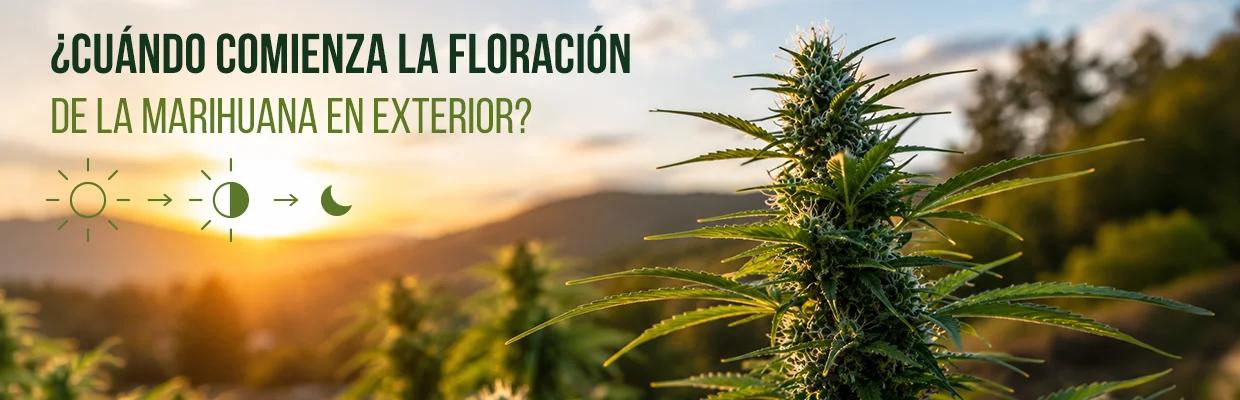
Without a doubt, this article covers the moment every home grower looks forward to most. Outdoor cannabis flowering marks a dramatic change in the plant, which must focus its energy on bud production while coping with the challenging conditions of intense summer heat.
Thanks to the evolution of cannabis plants and the care growers provide during flowering, yields can be greatly increased and flower quality dramatically improved. Whether you are a beginner or an experienced grower, we are confident that this article will give you plenty of useful tips for your next outdoor grow. Stay focused and keep reading!
Factors Affecting Outdoor Cannabis Flowering
Outdoor cannabis flowering does not depend on a single factor, but rather on a complex combination of environmental signals that plants interpret to determine the optimal time to reproduce.
Through evolution, cannabis, like many other species, determines the best time to flower and produce offspring.
The Role of Daylight Hours in Flowering
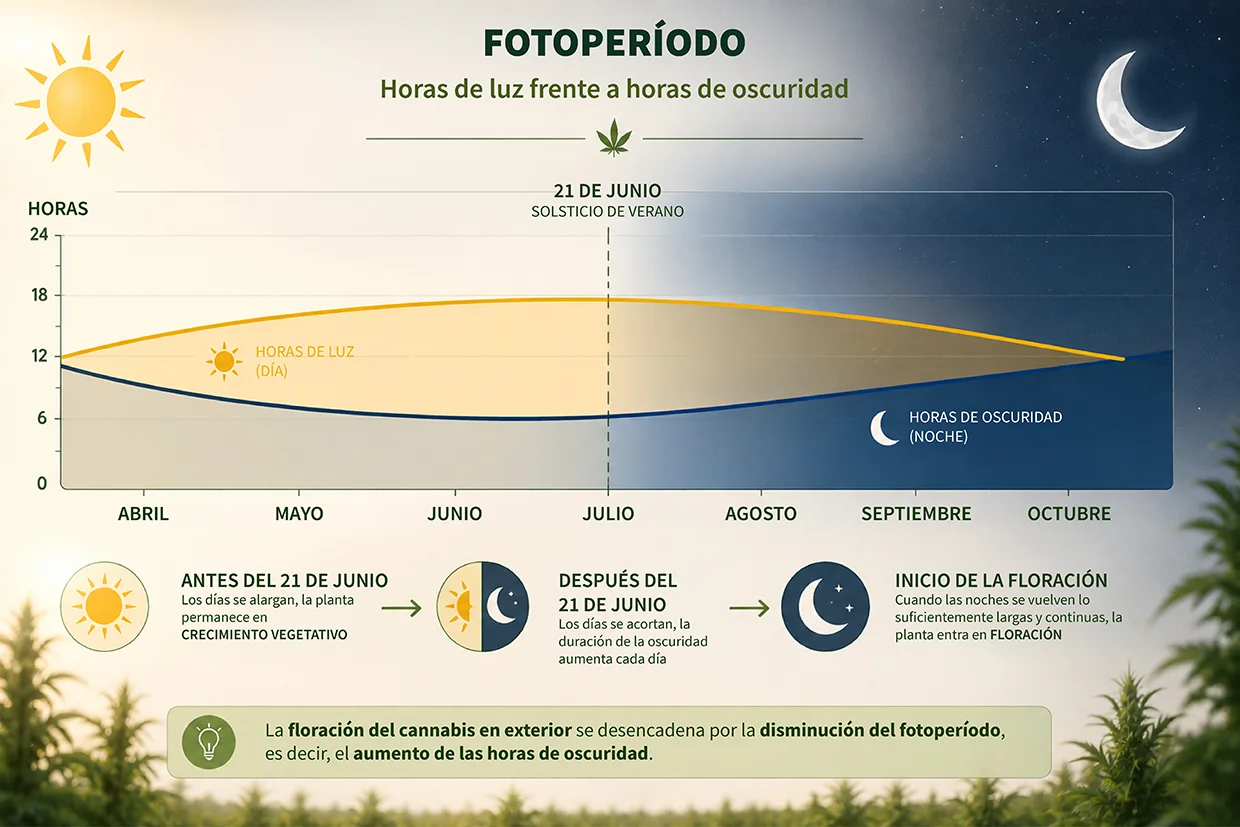
The most important factor is the photoperiod. Photoperiod-dependent cannabis strains are “short-day” plants, meaning they begin flowering when nights exceed a certain length. In the Northern Hemisphere, this happens naturally after the summer solstice (June 21), when the days begin to get shorter.
Although more sativa-dominant strains may require longer periods of darkness (13–14 hours), while indica-dominant strains may begin flowering with around 10–11 hours, in practice most modern strains start flowering outdoors in Spain in late July or early August, when the photoperiod reaches approximately 13–14 hours of light and 10–11 hours of darkness.
From a more scientific perspective, this mechanism depends on phytochrome, a photoreceptor protein that exists in two forms: Pr (inactive) and Pfr (active). Red light converts Pr into Pfr, while darkness reverses the process. When nights are long enough, Pfr concentrations fall below a critical threshold, triggering the hormonal cascade that initiates flowering.
For this reason, any nighttime light pollution, such as streetlights or lights from a house, can delay or even interrupt cannabis flowering, causing re-vegging or stress-induced hermaphroditism.
Climate and Temperature: Ideal Flowering Conditions
There is no doubt that climate influences outdoor cannabis flowering. Ideal temperatures during flowering range from 18–26 °C, with cooler nights (15–20 °C) encouraging the production of aromatic terpenes and anthocyanins, the purple pigments found in some strains.
Nighttime temperatures below 12 °C for prolonged periods slow the plant’s metabolism, extending marijuana flowering time outdoors and reducing final harvest weight.
Extreme cold and frost can completely destroy developing buds. On the other hand, excessively warm nights above 26 °C can degrade the most volatile terpenes, reduce resin production, and encourage fungal diseases such as powdery mildew or Botrytis.
High relative humidity above 60% can lead to fungal problems, so pay close attention during rainy periods, especially once the buds have formed.
How Does Flowering Begin in Cannabis Plants?
The flowering process in cannabis plants does not begin immediately and can take between 1 and 3 weeks depending on the genetics. This is known as pre-flowering, or the stretch, and it is a very critical stage for the plant.
At the hormonal level, gibberellin synthesis, associated with growth, decreases while auxins and ethylene involved in flowering increase.
First Visible Signs: Changes in Leaves and Branches

The first visible signs of outdoor cannabis flowering appear at the nodes, where preflowers emerge at the junctions between the branches and the main stem. On female plants, two white pistils protrude from a small green teardrop-shaped structure. On male plants, small balls without pistils appear and eventually open to release pollen.
At the same time, the plant begins stretching its branches and the internodal distance increases dramatically. Growth becomes much more vigorous, while the number of leaflets on the leaves gradually decreases.
Bud Development: When Do Buds Form?
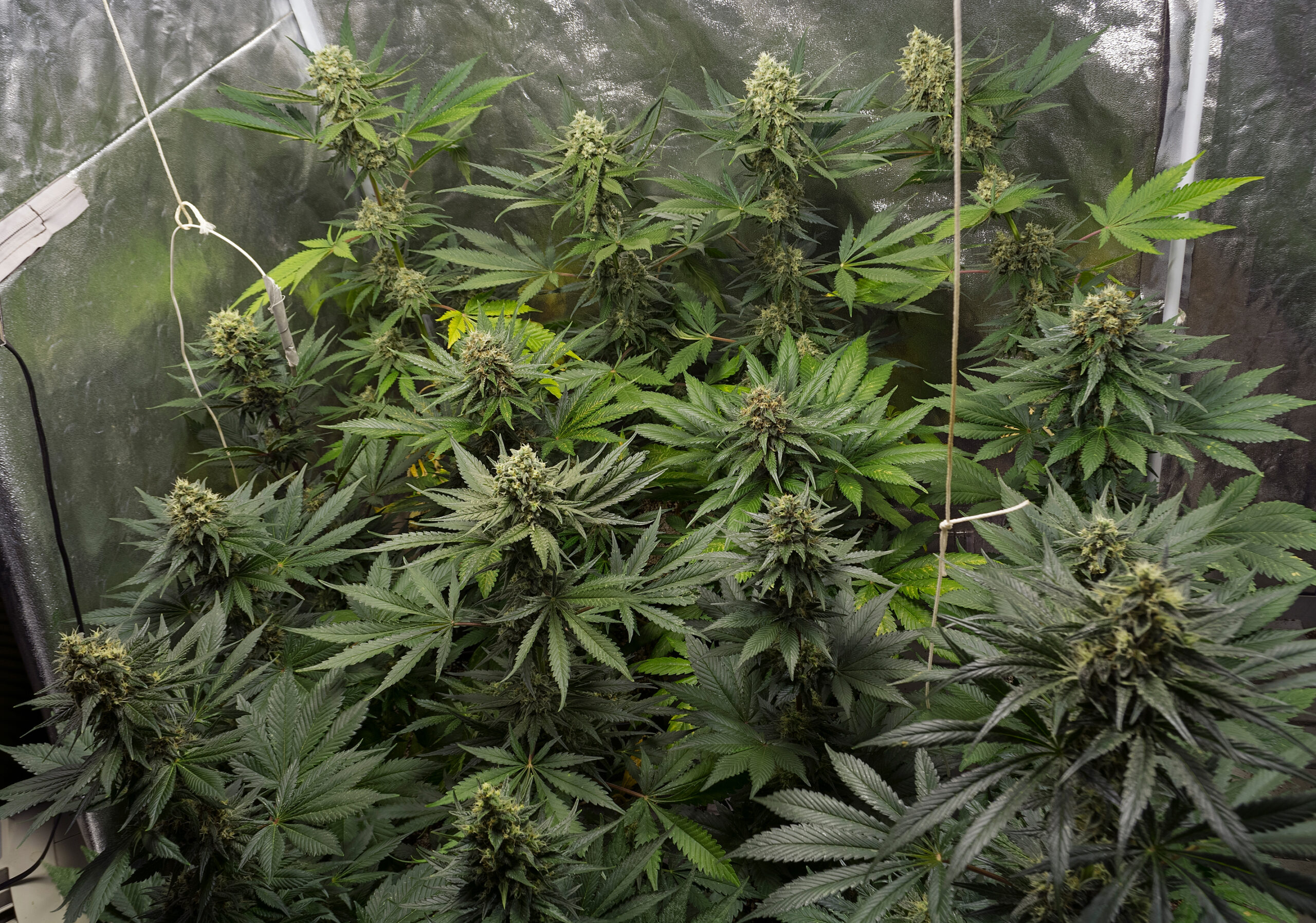
The first buds can usually be seen around 2–3 weeks after the preflowers appear. Initially, small calyxes filled with whitish pistils form and gradually swell as they produce resin, terpenes, and sugars and accumulate water in their tissues. During the final 3–4 weeks of cannabis flowering, the buds undergo their greatest increase in size.

Differences Between Cannabis Strains Outdoors
Not all strains behave in the same way during outdoor cannabis flowering.
Flowering in Autoflowering Strains

Autoflowering strains revolutionized outdoor growing by introducing Cannabis ruderalis genetics, which flower automatically after 3–4 weeks of vegetative growth regardless of the photoperiod. This means you can plant autos at different points during the outdoor season, from April to August in Spain, and harvest around 10–12 weeks later.
Outdoor cannabis flowering in autoflowering strains is highly predictable: the first preflowers appear around 21–28 days after germination, beginning a flowering process that lasts another 6–8 weeks. Their total life cycle from seed to harvest rarely exceeds 90 days, making multiple harvests possible in the same season: a crop started in April can be harvested in July, leaving time to start another batch for an October harvest.
Sweet Seeds® autoflowering strains are highly optimized for Mediterranean outdoor grows, completing their life cycle with excellent results even under moderate stress.
Flowering in Photoperiod-Dependent Strains
With classic, more traditional photoperiod-dependent strains, growers have greater control over flowering and can generally achieve higher yields than with autos. As mentioned above, outdoor cannabis flowering begins after the summer solstice as the days start getting shorter. In Spain, this normally occurs in late July or early August.
The duration of outdoor flowering depends largely on the type of cannabis genetics. Strains with a higher proportion of indica genetics, such as Afghan lines, may finish flowering around 7 to 9 weeks after it begins, which can place harvest in September. Hybrids may continue until early or mid-November, while more sativa-dominant strains can extend into late November or even well into December.
For this reason, it is important to know both the genetics and the local climate, as you do not want the harvest ruined by rain or cold.
One of the best tips for successfully completing outdoor cannabis flowering with photoperiod-dependent strains is to choose genetics adapted to your latitude. In northern Spain, prioritize more indica-dominant strains or fast hybrids that finish before the autumn rains. In the Mediterranean south or the Canary Islands, later sativa-dominant strains can be grown successfully.
Sweet Seeds® offers strains such as Gelonade® (SWS123), a fast hybrid with an 8-week flowering period that is ideal for humid climates, or Jack 47® (SWS08), a very potent sativa-dominant strain with a 9–10 week flowering period, perfect for warm, dry climates where it can fully express itself without suffering from rot. Another very interesting option is our F1 Fast Version® line, with cultivars that flower very quickly and are preferred in northern European countries and other areas where cold weather and autumn rains arrive earlier.
How to Care for Your Plants During Outdoor Flowering
Cannabis flowering is a stage that requires special attention. Small mistakes can lead to a significant reduction in the harvest.
Let’s look at some useful outdoor flowering tips that can make a real difference.
Managing Watering and Humidity
During outdoor cannabis flowering, plants need plenty of water to develop their buds and remain healthy while summer temperatures are high. The problem is that excess water, or constantly high moisture levels in the growing medium and surrounding air, create ideal conditions for opportunistic fungi.
As a general rule, it is best to water thoroughly but less frequently. In other words, when it is time to water, soak the growing medium well, then allow it to dry before watering again. At the very least, let the top layer dry before the next watering. Another useful tip is to water in the morning rather than at night, reducing prolonged nighttime humidity. A programmed drip irrigation system can be a valuable ally.
Finally, pay particular attention during the last few weeks, when the buds are at their densest. Monitor ambient humidity and inspect the buds every day. Prevention is always best: watch the weather forecast for rainy days and, when possible, protect the plant or harvest if you consider it necessary.
Key Nutrients for Healthy Flowering
Cannabis flowering requires a significant change in the plant’s feeding program. As flowering begins, nutritional needs shift toward greater demand for phosphorus (P) and potassium (K), two important nutrients involved in flower and resin production.
Use fertilizers specifically formulated for flowering and introduce them gradually from the beginning of flowering, building up toward the peak demand that usually occurs around 5 or 6 weeks after flowering starts. It is better to feed slightly less toward the end, as overfeeding is more difficult to correct, and flowers harvested while the plant still contains excessive fertilizer salts can be of lower quality.
When possible, use organic fertilizers, as they can deliver excellent results and help achieve outstanding aroma and overall quality.
Sweet Seeds®: An Excellent Choice for Outdoor Growing
At Sweet Seeds®, we have been offering high-quality cannabis seeds for 20 years, selected to perform exceptionally well in outdoor conditions. Year after year, we receive a large number of positive comments on social media, forums, and at cannabis events from growers using our genetics outdoors.
Autoflowering Strains Recommended by Sweet Seeds®
Without a doubt, autoflowering strains are among the most popular choices during the outdoor season. They have short growing cycles, can deliver high yields, and make it possible to stagger several harvests. Their photoperiod-independent flowering and moderate size also make them perfect for terrace grows.
Tropicanna Cherry XL Auto® (SWS112) is a recently developed strain that performs very well in both humid and dry climates and is ideal for outdoor growing. It develops rapidly and produces highly resinous buds with very exotic aromas.
Cream Mandarine XL Auto® (SWS55) is a classic that never disappoints. With its high yields and citrus aromas with Diesel notes, it remains one of our best-selling strains year after year. It is also ideal for less experienced growers and, in skilled hands, can become a true beast.
Crystal Candy XL Auto® (SWS87) is like candy in cannabis plant form. Highly productive and flavorful, this strain delivers excellent results in outdoor cannabis grows. Do not miss the chance to try this exceptional cultivar.
Photoperiod-Dependent Strains Recommended by Sweet Seeds®
Among our leading options, our F1 Fast Version® line deserves special mention. These cultivars flower very quickly and deliver spectacular results outdoors.
If time is not an issue, classics such as S.A.D. Sweet Afgani Delicious S1® (SWS02) or Green Poison® (SWS14) never disappoint. Another essential choice is our most potent strain, reaching up to 31% THC: Gorilla Girl® (SWS74).
Explore the Sweet Seeds® Seed Catalog for Your Outdoor Grow!
Now that you are ready to put your growing skills into practice, we recommend exploring the complete Sweet Seeds® catalog to expand your collection with some of the best and most interesting cannabis strains available today.
Sweet harvests!
Sweet Seeds S.L. is not responsible for any misuse of the information contained in this article. Cannabis growing may constitute a criminal offense or an administrative violation; please consult the laws regarding cannabis in your place of residence. Sweet Seeds S.L. does not intend, under any circumstances, to encourage illegal practices.
Deputy Director of the Content and Image Department at Sweet Seeds®.
Articles by Jaypp (see all)
- Outdoor Cannabis Flowering: Timing and Duration - 26 de October de 2026
- How to Decarboxylate Cannabis: A Step-by-Step Guide - 26 de October de 2026
- How to Germinate Marijuana Seeds: Basic Guide - 8 de October de 2026