
Cart
There are no more items in your cart



Best Fertilizers for Cannabis

To achieve the best results when growing cannabis, it is essential to provide the plants with a suitable nutrient plan using the best fertilizers for cannabis.
These should be chosen carefully, since the nutritional needs of cannabis plants vary depending on their stage of development. Proper use of the right fertilizers will result in better plant quality and higher yields.
Types of Fertilizers for Cannabis
Fertilizers for plants, including cannabis plants, are mainly classified according to their origin, composition, and method of application.
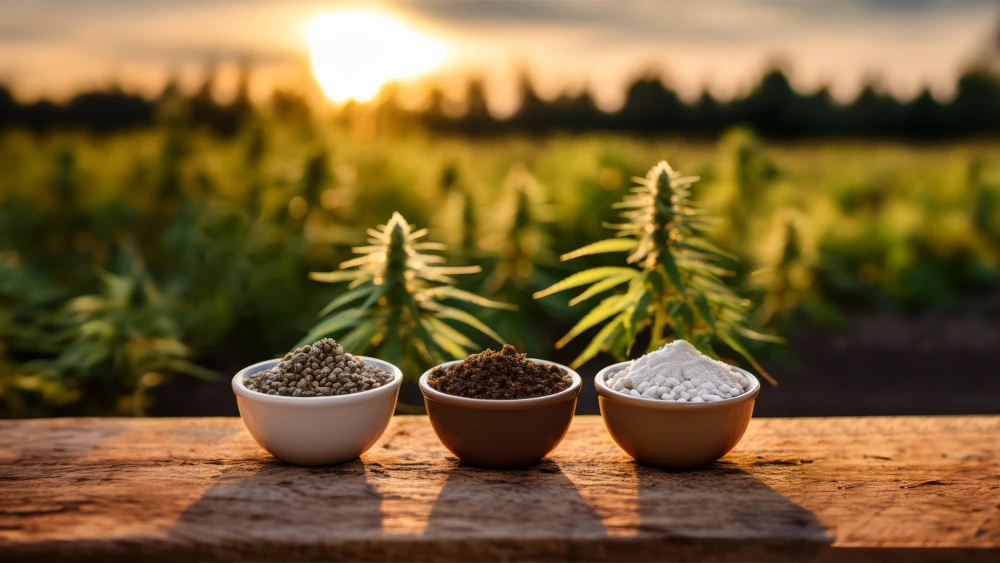
Based on their origin, we find organic fertilizers, derived from natural materials such as plant or animal matter, and inorganic or mineral fertilizers, made from mineral or chemical compounds.
In terms of application, fertilizers can come in solid form, such as granules, powders, or crystals, or in liquid form, for application through irrigation or spraying.
Organic Fertilizers
Obtained from natural sources such as plant matter, animal matter, or microorganisms, organic fertilizers offer benefits for soil and growing-medium quality.
Some of the most common organic fertilizers or sources of organic matter include:
- Compost
- Manure
- Worm Castings
- Guano
- Bokashi
- Fermented Plant Extracts and “Bioles”
Organic fertilizers improve soil structure and can help plants develop a more complete organoleptic profile, resulting in flowers with more intense and natural aromas and flavors.
Inorganic or Mineral Fertilizers
Unlike organic fertilizers, mineral fertilizers, also known as inorganic or chemical fertilizers, are made from minerals extracted from nature or from chemical compounds.
Some of the main differences between inorganic and organic fertilizers are their high concentration of essential nutrients, their versatility, and, above all, their high solubility, which allows nutrients to become available to plants more quickly.
Some of the main inorganic fertilizers include:
- Nitrogen Fertilizers: High in nitrogen.
- Phosphate Fertilizers: Fertilizers rich in phosphorus.
- Potassium Fertilizers: Fertilizers in which potassium is the main nutrient.
We can also find blends that combine several major nutrients, such as the well-known granular NPK fertilizers, which are commonly used because of their versatility.
Fertilizers for Each Stage of Growth
When growing cannabis plants, nutrient requirements vary at each stage of development. For this reason, fertilizers should be applied according to the specific needs of the plants during each stage.
1. Germination Stage
During germination, seeds do not require external nutrients, since they contain internal reserves of the essential nutrients needed for their initial development.
Recommended Products:
Products such as phytohormones or stimulants that encourage healthy root development and early growth are recommended.
2. Vegetative Growth
During this stage, the plant directs its energy toward the development of essential structures such as roots, stems, and leaves.
Recommended Nutrients:
An NPK ratio of around 2:1:2 can be applied, up to approximately 11-5-6.
3. Pre-Flowering
During the pre-flowering stage, plants begin preparing for flower production.
Recommended Nutrients:
During this transition between vegetative growth and flowering, emphasis should be placed on NPK ratios ranging from 2:2:2 to 2:2:3.
4. Flowering
During flowering, plants require lower levels of nitrogen (N) and higher concentrations of phosphorus (P) and potassium (K) to encourage flower development and resin production.
Recommended Nutrients:
At this final stage, an NPK ratio of approximately 1:3:3 or 0:3:3 can be used.
Fertilizers for Cannabis According to Seed Type
Choosing the right fertilizer is crucial for obtaining healthy and productive cannabis plants. Depending on the type of seed you are growing, whether autoflowering or photoperiod-dependent, nutritional requirements can vary significantly. Here we explain how to choose the most suitable fertilizer for each case.
Fertilizers for Autoflowering Seeds
Autoflowering seeds have a shorter life cycle and do not depend on the photoperiod to begin flowering. This means their nutrition must be adjusted to maximize development within a limited period of time.
For this type of plant, you can use fertilizers with a balanced content of nitrogen, phosphorus, and potassium (NPK) to encourage vigorous plant development.
As the plant enters flowering, gradually reduce nitrogen and adjust phosphorus and potassium levels to support flower development.
Recommended Products: Use a complete range of fertilizers, focusing more on flowering fertilizers, and make sure to provide enough nitrogen during the final stages of vegetative growth, since this stage is very short in autoflowering plants, lasting approximately 3 to 5 weeks. The use of Cal/Mag can also be very helpful during the transition into flowering.
Fertilizers for Feminized Seeds (Photoperiod-Dependent)
The often incorrectly termed “feminized seeds” (photoperiod-dependent seeds) rely on the photoperiod to flower and can therefore have a longer life cycle, allowing greater flexibility when adjusting their nutrition.
You can apply fertilizers according to each stage:
Vegetative Growth Stage: Use fertilizers rich in nitrogen. Depending on how long the plant remains in this stage, you will need to provide a greater or smaller amount.
Pre-Flowering Stage: Gradually reduce nitrogen and begin introducing phosphorus and potassium to prepare the plant for flowering.
Flowering Stage: Use fertilizers specifically formulated for flowering, with higher levels of phosphorus and potassium. You can also supplement them with flowering stimulators to maximize yields.
General Tip: Regardless of the type of seed, it is important to follow the dosage instructions for each product and regularly monitor the pH and EC (electrical conductivity) of both the nutrient solution and the growing medium to avoid nutrient uptake problems. Remember that using Cal/Mag can also help during the transition into flowering.
Essential Nutrients for Cannabis
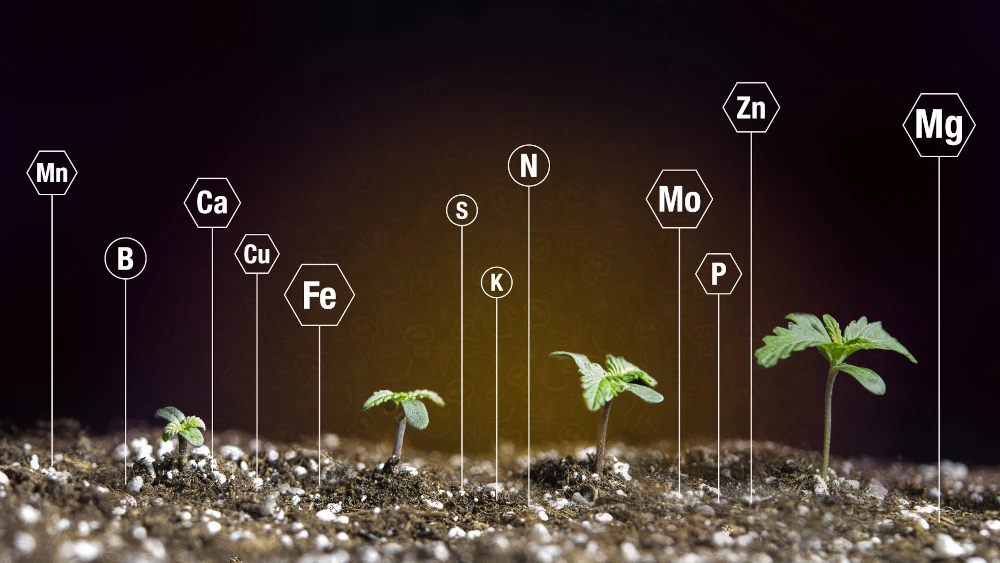
To fertilize cannabis plants correctly, it is also important to understand which nutrients are essential and what functions they perform.
The essential nutrients required by plants are classified into two groups: macronutrients and micronutrients. Macronutrients include the three main or primary nutrients—nitrogen (N), phosphorus (P), and potassium (K)—together with the secondary macronutrients calcium (Ca), magnesium (Mg), and sulfur (S).
Micronutrients include iron (Fe), zinc (Zn), copper (Cu), manganese (Mn), molybdenum (Mo), boron (B), chlorine (Cl), and nickel (Ni).
Nitrogen (N)
Nitrogen is a key component of chlorophyll, which is essential for photosynthesis, and plays an important role in the development of leaves and stems. For this reason, it is one of the most important essential macronutrients for plants.
Phosphorus (P)
Phosphorus is an essential macronutrient involved in energy transfer and storage processes, such as ATP (adenosine triphosphate).
This nutrient is particularly important because it is essential for cell division and DNA and RNA synthesis, as well as for root, flower, and fruit development.
Potassium (K)
Among the essential macronutrients, potassium is vital for osmotic regulation and ionic balance within plant cells.
It is important because it strengthens plants and improves their resistance to diseases and adverse environmental conditions.
Calcium (Ca), Magnesium (Mg), and Sulfur (S)
These three secondary macronutrients perform crucial functions that complement those of the primary macronutrients.
Calcium (Ca): Strengthens cell walls, acting as a type of “cement” that binds plant cells together. This provides structural strength to the plant, improves its resistance to diseases and pests, and helps prevent lodging (plants bending or falling over).
Magnesium (Mg): It is the central atom in the chlorophyll molecule, the green pigment responsible for photosynthesis. Magnesium is also involved in activating enzymes that participate in protein synthesis and energy metabolism.
Sulfur (S): It is an essential component of amino acids and vitamins, which are fundamental to plant growth and development. Sulfur also plays a role in chlorophyll formation, influencing photosynthesis, and contributes to plant resistance against diseases and pests.
Micronutrients
Although plants do not need them in the same quantities as macronutrients, micronutrients are equally necessary for their health and development.
Some of the most important micronutrients include:
Iron (Fe): Essential for chlorophyll formation and electron transport during photosynthesis.
Manganese (Mn): Involved in photosynthesis, respiration, and nitrogen assimilation. It also helps the plant defend itself against pathogens.
Zinc (Zn): Necessary for the synthesis of proteins and plant hormones, such as indole-3-acetic acid (auxin), which regulates growth.
Copper (Cu): Involved in photosynthesis, respiration, and carbohydrate metabolism. It also contributes to the lignification of cell walls, which increases plant strength.
Boron (B): Plays an important role in cell division, tissue development, pollination, and the formation of fruits and seeds.
Molybdenum (Mo): Essential for atmospheric nitrogen fixation by bacteria in legumes and also involved in nitrogen assimilation by plants.
Chlorine (Cl): Involved in photosynthesis and water balance in plants. It may also improve disease resistance.
Cannabis Fertilizers: What Are They and How Do You Choose the Right One?
Cannabis fertilizers are formulations that provide the essential nutrients plants need to grow and flower optimally.
Why Are Fertilizers Important for Growing Cannabis?
Fertilizers for cannabis growing provide the macro- and micronutrients needed to meet the nutritional requirements of these plants, helping them reach their full potential in terms of size, flower production, and resin production.
How to Choose the Right Fertilizer for Cannabis
When choosing the right fertilizer, you should mainly consider the following:
Growth and flowering stages: Choose the fertilizer according to the stage of development the plant is in.
Growing medium: Choose a fertilizer recommended for the medium you are using, whether soil, coco coir, or hydroponics.
Tips for Effective Fertilization
Some useful guidelines for effective fertilization include the following:
- Start with low doses and increase gradually: It is better to be cautious than to overfeed. Too much fertilizer can burn the roots and damage the plants.
- Observe the plants and adjust fertilization according to their needs: Your plants will show you whether they are receiving adequate nutrition. Pay attention to their color, growth, and development.
- Use pH and EC meters to monitor the nutrient solution: pH and EC are important parameters that affect nutrient uptake by plants.
- Flush before harvest: This helps remove excess fertilizer salts and can improve the flavor of the flowers.
Remember that fertilization is a crucial aspect of cannabis growing. Providing the right nutrients will help ensure healthy, vigorous, and productive plants.
Common Mistakes When Using Cannabis Fertilizers
It is very common for beginners to make mistakes when using fertilizers for cannabis. Here are some of the most common mistakes when fertilizing cannabis plants so that you can avoid them:
1. Overfertilization: Cannabis plants can be sensitive to excess nutrients, which can cause root burn, deficiencies in other nutrients, slow growth, and generally less healthy plants.
2. Ignoring pH: An incorrect pH can prevent nutrient uptake even when the nutrients are already present in the growing medium.
3. Using the wrong fertilizer: Using a fertilizer intended for vegetative growth during flowering, for example, can lead to very poor results at harvest.
4. Failing to consider the plant’s specific needs: Each cannabis strain has slightly different nutritional requirements. Factors such as genetics, the growing environment, and the growing medium also play a role.
5. Not flushing before harvest: Flushing at the end of flowering removes excess salts from the growing medium, helping the plant reduce its nutrient reserves and improving the flavor and quality of the harvest.
Get High-Quality Cannabis Seeds at Sweet Seeds®!
Successful cannabis growing starts with choosing quality seeds, and at Sweet Seeds® you will find excellent genetics suited to different growing methods and fertilizer programs. Whether you grow in soil, coco coir, or hydroponics, our strains deliver high yields, potency, and unique flavors.
Discover our F1 Fast Version® strains, ideal for optimizing your harvest in less time. Our strains also stand out for their stability and ease of growing, making them suitable for growers of all experience levels.
Sweet Seeds S.L. is not responsible for any misuse of the information provided in this article. Growing Cannabis may constitute a criminal offense or administrative infraction; please check the Cannabis legislation applicable in your place of residence. Sweet Seeds S.L. does not, under any circumstances, intend to promote illegal practices.

Deputy Director of the Content and Image Department at Sweet Seeds®.
Articles by Jaypp (see all)
- How to Germinate Marijuana Seeds: Basic Guide - 8 de October de 2026
- How to Fertilize Your Cannabis Plants Easily - 16 de September de 2026
- CBD for Osteoarthritis: How Can It Help? - 16 de September de 2026