
Cart
There are no more items in your cart



How to Germinate Marijuana Seeds: Basic Guide
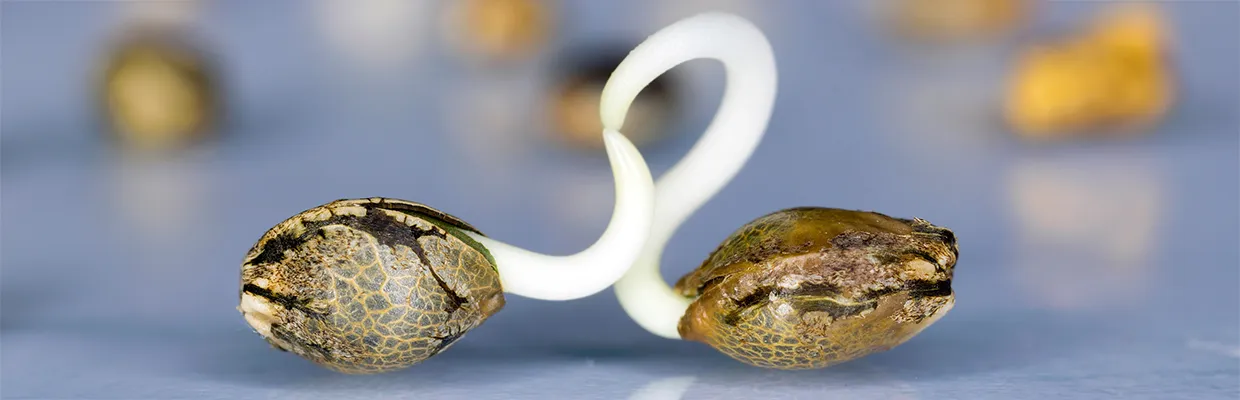
Today, you will learn once and for all how to germinate marijuana seeds successfully in 100% of cases. We will share all the secrets you need to get through this essential first step successfully, helping you produce strong, healthy plants that deliver quality harvests without failing along the way.
A good germination process can make the difference between a weak plant and a future champion. If you want to avoid problems from the very beginning, learning how to germinate weed seeds properly is essential. Germination not only brings the seed to life but also lays the foundation for successful growing.
In the Sweet Seeds® catalog, you will find strains that are ideal for germination, including photoperiod-dependent seeds and autoflowering seeds, each with its own advantages depending on what you are looking for: full control over the growing cycle or a faster harvest without sacrificing quality.
Understanding the process from the start will help you improve your results and avoid losses. Knowing how to germinate marijuana seeds quickly will also help you optimize your timing and get your grow off to a strong start. Let’s see how to do it step by step!
Why Is It Important to Germinate Marijuana Seeds Correctly?
Germinating marijuana seeds correctly is the foundation for healthy, resilient, and productive plants. A good start ensures that the roots develop strongly and that the plant has everything it needs to grow without complications. Therefore, when you learn how to germinate marijuana seeds properly, you are giving the genetics the best opportunity to express their full potential while avoiding problems such as weak seedlings, disease, or failed germination.
Germinating seeds carefully allows the plant to develop quickly, steadily, and evenly, which can ultimately result in larger, higher-quality harvests. If a seed does not germinate properly, the plant may grow under stress or even die, directly affecting bud production and the final result.
Learning how to germinate marijuana seeds quickly also allows you to optimize your growing schedule, especially when working with autoflowering seeds, which have shorter life cycles. Effective germination is the first step toward getting the most from your seeds. A good harvest always starts with good germination!
The Impact of Proper Germination on the Plant
When germinating seeds, keep in mind that this is one of the most important steps for a successful grow.
Good germination ensures that the plant begins its life with strong roots, allowing it to absorb nutrients more efficiently and develop steadily. When you know how to germinate marijuana seeds under the right conditions of moisture, temperature, and oxygen, you increase your chances of obtaining vigorous, healthy plants.
A mistake at this stage can affect the plant throughout its life: weak roots, fragile stems, and slow growth can all result from poor germination. In addition, when you manage to germinate marijuana seeds quickly and efficiently, you save time and reduce the risk of the seed rotting or failing to thrive.
The impact of this process is so significant that, when done correctly, it improves the plant’s structure, resilience, and, of course, the final quality of the buds.
Common Methods for Germinating Marijuana Seeds
There are several popular methods for germinating marijuana seeds simply and effectively. The most commonly used are the damp paper towel method, direct germination in soil or in Jiffy pellets or peat pellets, and germination in water.
Each technique has its advantages, but all of them aim to provide the seed with a warm, moist environment and enough oxygen. Choosing the right method will allow you to germinate marijuana seeds quickly and with high success rates.
Germination in Damp Paper Towels (Paper Towel Method)
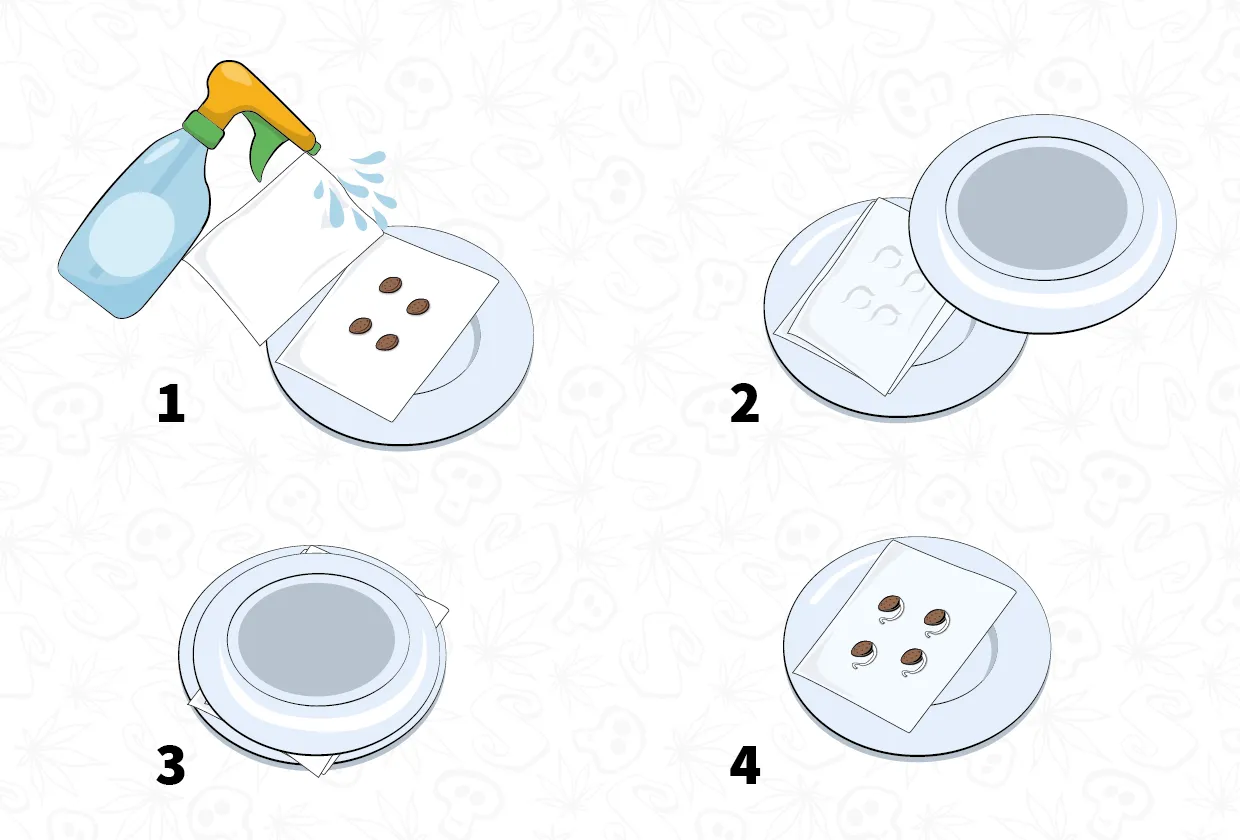
The damp paper towel method is one of the most widely used ways to germinate marijuana seeds simply and effectively.
All you need is two plates or a plastic container, paper towels, and water. Place the seeds between two layers of damp paper towel (not soaking wet) and cover them with another plate to retain moisture and keep them in the dark.
The ideal temperature is between 20 and 25 °C. After approximately 24 to 72 hours, the seeds should begin to open and show the taproot. This is an excellent method if you are looking for how to germinate weed seeds quickly, as it allows you to monitor the process visually. It is important to check the seeds every day to make sure the paper does not dry out and that mold does not appear. Once the taproot is a few millimeters long, it is time to transplant the seed carefully into its final growing medium.
During the process, try not to touch the seeds to reduce the risk of fungal contamination. Above all, make sure the paper stays moist without becoming saturated, allowing a good balance between oxygen and moisture.
Germination in Soil or Growing Medium

Germinating seeds directly in soil is a natural method and is highly recommended for avoiding unnecessary transplants.
Simply prepare a small pot with a light growing medium, make a hole approximately 1 centimeter deep, and place the seed inside (with the taproot pointing downward if it has already germinated). Water gently before placing the seed and keep the soil moist but never waterlogged.
This method allows you to germinate marijuana seeds quickly in a stable environment, avoiding the stress of changing the growing media. It is ideal for growers looking for simplicity and uninterrupted growth. The downside is that the seed is out of sight, making it more difficult to monitor its condition.
Germination in Water (Glass Method)
The glass method is a simple option for germinating marijuana seeds under controlled conditions. It is particularly useful for older seeds that need extra hydration to awaken from dormancy.
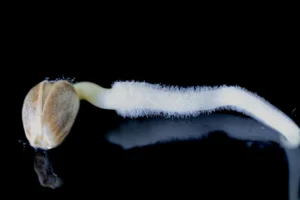
This method consists of placing the seeds in a glass of room-temperature water and keeping them in a warm, dark place at between 20 and 25 °C. After approximately 24 to 48 hours, the seeds will begin to open and show the taproot.
This method is ideal if you are looking for how to germinate marijuana seeds quickly, but it is important not to leave the seeds in water for too long, as they may suffocate or deteriorate. Adding a few drops of hydrogen peroxide can speed up the process while also helping keep the water clean.
Ideally, combine this technique with the damp paper towel method. You can leave the seeds in water for 24 hours to hydrate them properly and then transfer them to damp paper so the taproot can continue growing in search of moisture.
Optimal Conditions for Germinating Marijuana Seeds
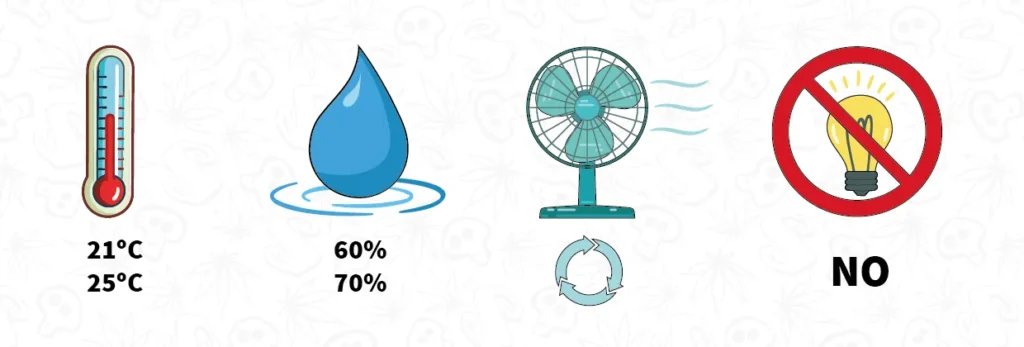
To germinate marijuana seeds successfully, it is essential to maintain a stable temperature between 20 and 25 °C and high humidity without waterlogging. The well-known “router technique” can be useful if the room is cold, but it can be counterproductive in a warm climate, as excessive heat can be very harmful.
Darkness favors germination, while a well-ventilated environment helps prevent fungal growth. Controlling these factors will help you germinate marijuana seeds quickly and produce strong seedlings from the very beginning, supporting healthy development.
Ideal Germination Temperature
Maintaining the right temperature is essential for germinating marijuana seeds correctly. The ideal range is between 20 °C and 25 °C, as these conditions encourage the seed to activate and open quickly. If the temperature falls below 18 °C, the process may slow down or even fail. Conversely, temperatures above 28 °C can cause stress, rot the seed, or promote fungal growth.
It is advisable to germinate marijuana seeds in a warm place without drafts or sudden temperature changes. Many growers use propagators or heat mats to maintain these conditions.
Humidity and Light During Germination
Germination is a process that should take place in darkness, so it is important to keep seeds away from any light source, whether artificial or natural. Keep in mind that, in nature, germination takes place beneath the soil.
Moisture, together with temperature, activates the germination process in the seed. On the one hand, it softens the seed coat; on the other, it provides the conditions needed for the endosperm to supply the nutrients required for this first stage.
How to Transplant Seedlings After Germination
Once the seeds have germinated, they should be transplanted carefully.
Preparing the Growing Medium for Transplanting
Make sure you use a suitable growing medium for cannabis growing. It should be light, airy, and able to retain moisture without compacting. Ideally, use a “light mix” containing fewer nutrients so the seedling is not burned during its first few days. For example, you can dilute a fully fertilized growing medium with a nutrient-free medium or perlite to reduce EC while keeping the substrate highly aerated and able to retain the moisture needed during these early days.
As the plant grows, it can then be transplanted into a fully fertilized growing medium or you can begin applying fertilizers.
When and How to Transplant Seedlings
Make sure the taproot has emerged fully and is at least one centimeter long. This gives the seed enough root growth to anchor itself in the growing medium and begin taking up water and nutrients.
Keep in mind that a root system consists of the primary root, secondary roots, the root cap, and root hairs, which are responsible for much of the water and nutrient uptake during the early stages of growth. When transplanting into the growing medium, the root cap, which protects the root tip, should point downward. Handle the root very carefully to avoid damaging the delicate root hairs.
Water the growing medium and then make a small hole deep enough to accommodate the seed and the available length of the taproot. Insert the seed with the root tip pointing downward, then gently press the growing medium around it, leaving the seed coat visible so you can keep an eye on the seed. After one or two days, the seedling should reveal its cotyledons and begin its life cycle.
Which Marijuana Seeds Are Best for Germination?
Keep in mind that not all cannabis seed banks offer the same guarantees when it comes to seed germination. At Sweet Seeds®, one of the fundamental practices used to ensure successful germination is testing every batch of seeds before it goes on sale.
After the seeds have rested in state-of-the-art refrigerated chambers, our team performs multiple germination tests using the classic UFO method, which is widely used by home growers. This is the paper towel method. If a batch fails to achieve a 95% germination rate, it is discarded.
Autoflowering Seeds: Fast and Easy to Germinate
At Sweet Seeds®, we are proud to offer some of the best autoflowering seeds on the market. They are very easy to germinate, and their life cycle is characterized by great vigor and excellent results in record time, typically 7 to 9 weeks from germination.
Some examples include Permanent Jealousy XL Auto® (SWS115), Orange Apricot Glue XL Auto® (SWS103), and the magnificent Diablo Rojo XL Auto® (SWS110).
Photoperiod-Dependent Seeds: Controlled, Vigorous Growth
If you prefer seeds that give you control over the growth cycle, Sweet Seeds® photoperiod-dependent seeds retain their strong hybrid vigor and high germination rates, with results that speak for themselves: Sweet Seeds® is the Spanish seed bank with the most awards to its name.
Some examples include Red Hot Muffin (SWS83), Gorilla Girl F1 Fast Version® (SWS86), and the legendary Green Poison® (SWS14).
Germinate Successfully with Sweet Seeds®!
Remember, successful germination requires controlling moisture and temperature while starting with stable, high-quality genetics.
We invite you to explore our complete catalog and expand your collection with some of the best marijuana seeds on the market.
Sweet Seeds S.L. is not responsible for any misuse of the information contained in this article. Cannabis growing may constitute a criminal offense or an administrative violation; please consult the laws regarding cannabis in your place of residence. Sweet Seeds S.L. does not intend, under any circumstances, to encourage illegal practices.
Deputy Director of the Content and Image Department at Sweet Seeds®.
Articles by Jaypp (see all)
- How to Germinate Marijuana Seeds: Basic Guide - 8 de October de 2026
- How to Fertilize Your Cannabis Plants Easily - 16 de September de 2026
- CBD for Osteoarthritis: How Can It Help? - 16 de September de 2026