
Cart
There are no more items in your cart


Differences Between Hash and Pollen: What Are They?
In this article, we explore the differences between hash and pollen, focusing on the confusion surrounding the term “pollen,” which is often incorrectly used to refer to hash. We also clarify the true meaning of pollen from male cannabis plants, as well as other terms that are commonly misused, and explain how incorrect terminology can affect the general understanding of cannabis and its derivatives.
Keep reading to discover the differences between hash and pollen—and much more!
What Is “Real” Pollen?
Cannabis pollen carries the male reproductive cells and is produced by male flowers in order to fertilize female plants. This fine, yellowish powder is stored in the anthers found within the male cannabis flowers.
Once the anthers open, they release pollen into the air, where it can travel and pollinate any nearby female cannabis plant that is in a receptive stage, with young pistils that are usually creamy white. If pollination is successful, seeds will then develop.
Therefore, just as with other plants, its natural function is pollination, and no human intervention is involved in its production. Although this pollen can be collected for selective pollination, its production is entirely natural.
The Role of Pollen in Cannabis Reproduction
Without pollen, there would be no seeds. In simple terms, it performs a role comparable to that of sperm cells in human reproduction.
Pollen is not always obtained from male plants. Breeders use sex-reversal techniques on female plants to induce them to produce pollen, which can then be used to fertilize other female plants and obtain feminized cannabis seeds. Pollen therefore plays a very important role in cannabis breeding and genetics.
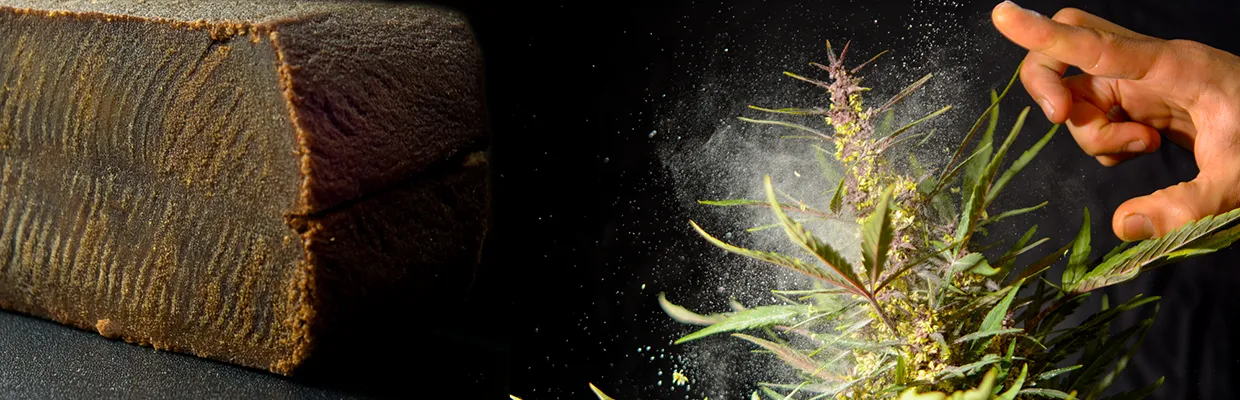
Male flowers producing pollen from a sex-reversed cannabis plant.
Why Is Pollen So Different from Hash?
Hash is a product made from the resin-rich glandular trichomes of female cannabis plants. Its purpose is very different from that of pollen produced by male plants. Male cannabis pollen is not normally consumed, whereas hash is consumed for medicinal and recreational purposes.
One is produced by collecting and often pressing resin glands called trichomes, while the other is the collective term for the microscopic or nearly microscopic grains produced by seed plants (spermatophytes), each of which contains a male gametophyte.
“Pollen” in Cannabis Slang: Misuse of the Term
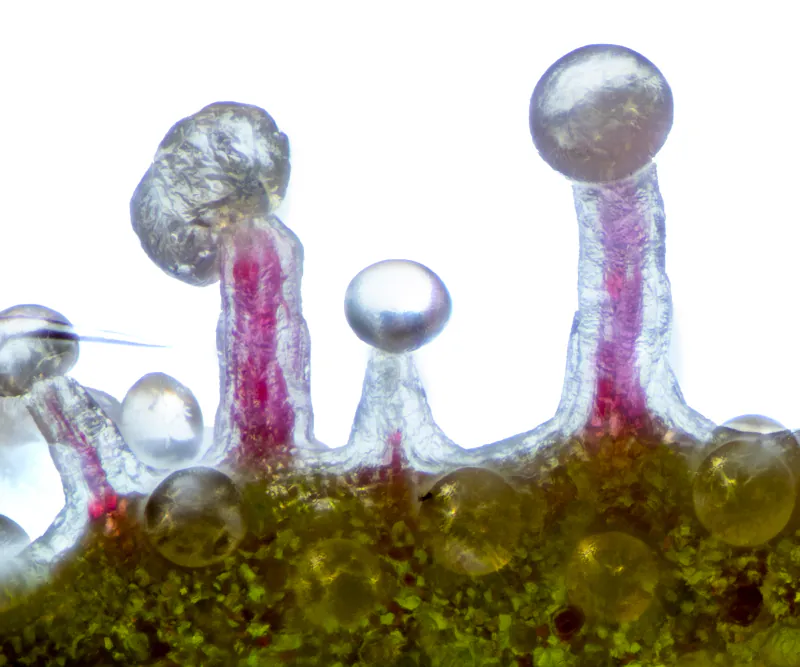
Trichomes with clearly visible heads.
So why is the word “pollen” used to describe unpressed hash?
The most likely explanation is their visual similarity. In the following sections, we will look at the differences between pollen and hash while also exploring some of their similarities.
The Trichome and Hash Extraction Process
Cannabis produces glands called trichomes, where important compounds such as terpenes, flavonoids, and cannabinoids like THC and CBD are stored.
They are shaped somewhat like lollipops and can be seen with the naked eye, although it is preferable to observe them through a microscope. During extraction, the trichome heads are separated, since this is where most of the active compounds are concentrated.
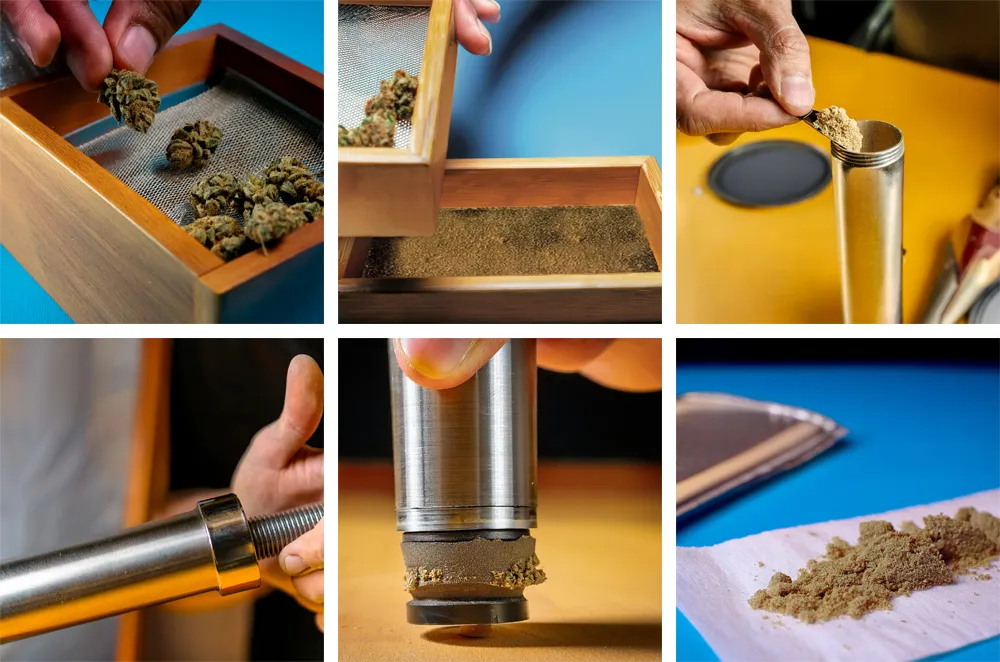
Dry sift in loose and pressed form.
To make a dry cannabis extraction (Dry Sift), a screen is used with the appropriate mesh size to allow these heads to pass through. They usually measure around 120 microns. The result is an equally fine-looking powder with a yellowish-cream color.
The Semantic Confusion: Where Does the Term “Pollen” Come From?
The term pollen comes from the Latin pollen, meaning “very fine powder,” and, as mentioned earlier, pollen from male plants has the appearance of a very fine yellow powder.
This may explain why people sometimes fail to make a clear distinction between hash and pollen, leading hash to be popularly referred to as “pollen,” a usage that has become widespread among cannabis consumers.
The Difference Between “Real” Pollen and Hash: Why the Confusion?
The real differences between pollen from male plants and hash are more than obvious, but let us look at them in greater detail.
What Is Hash, Really?
Hash is produced by pressing and working, often with heat, an extraction obtained from female cannabis plants in which the trichomes from the buds have been collected.
Why Is It Incorrect to Call Hash “Pollen”?
Because calling hash “pollen” may lead people to believe that hash is pressed pollen, when, as we have already seen, this is not the case. Hash is made from pressed trichomes.
Cannabis Slang: Why Are Terms Such as “Sex Reversal” and “Feminized” Misunderstood?
At Sweet Seeds®, we have noticed that there are other terminology errors within the cannabis culture. One example is the confusion surrounding the term “sex reversal,” when the correct expression should be “sex inversion,” as well as the use of “feminized” instead of “photoperiod-dependent.”
“Sex Reversal” vs. “Sex Inversion”: What Is the Difference?
When the sex of a plant is artificially modified using STS (silver thiosulfate) for the production of feminized seeds, the term commonly used is “reversal.”
Why should we use “sex inversion” rather than “sex reversal”? The explanation is simple: the word reversal means “the act of restoring something to its previous state.” However, when carrying out the process that causes female cannabis plants to produce male flowers in order to collect their pollen and fertilize a female plant, resulting in feminized cannabis seeds, the plant is not returning to its original state. For this reason, the more accurate term would be sex inversion (from female to male).
Feminized vs. Photoperiod-Dependent: What Do These Terms Really Mean?
Another terminology error within cannabis slang involves the incorrect use of the word “feminized” to refer to photoperiod-dependent plants.
It is common to hear growers ask about the differences between feminized and autoflowering strains when what they actually mean is the difference between photoperiod-dependent strains, which rely on the light cycle to flower, and autoflowering strains, which flower independently of the light cycle and instead begin flowering according to age.
The correct way to classify seeds is:
- Regular Seeds = can produce male or female plants.
- Feminized Seeds = produce female plants.
- Autoflowering Seeds = flower once they reach a certain age.
- Photoperiod-dependent Seeds = flower according to the photoperiod.
Why Is It Important to Use the Correct Terms in Cannabis Growing?
Understanding the differences between hash and pollen, as well as using the correct terminology, not only improves clarity but also helps improve practices and knowledge within the cannabis community. Knowledge among home cannabis growers is often passed on by word of mouth, so it is important to educate people on these terms and establish reliable foundations in order to avoid confusion.
A proper understanding of terminology helps facilitate the exchange of knowledge and improve practices throughout the cannabis world, including its history, cultivation, and consumption.
Myths and Facts About Hash and Pollen
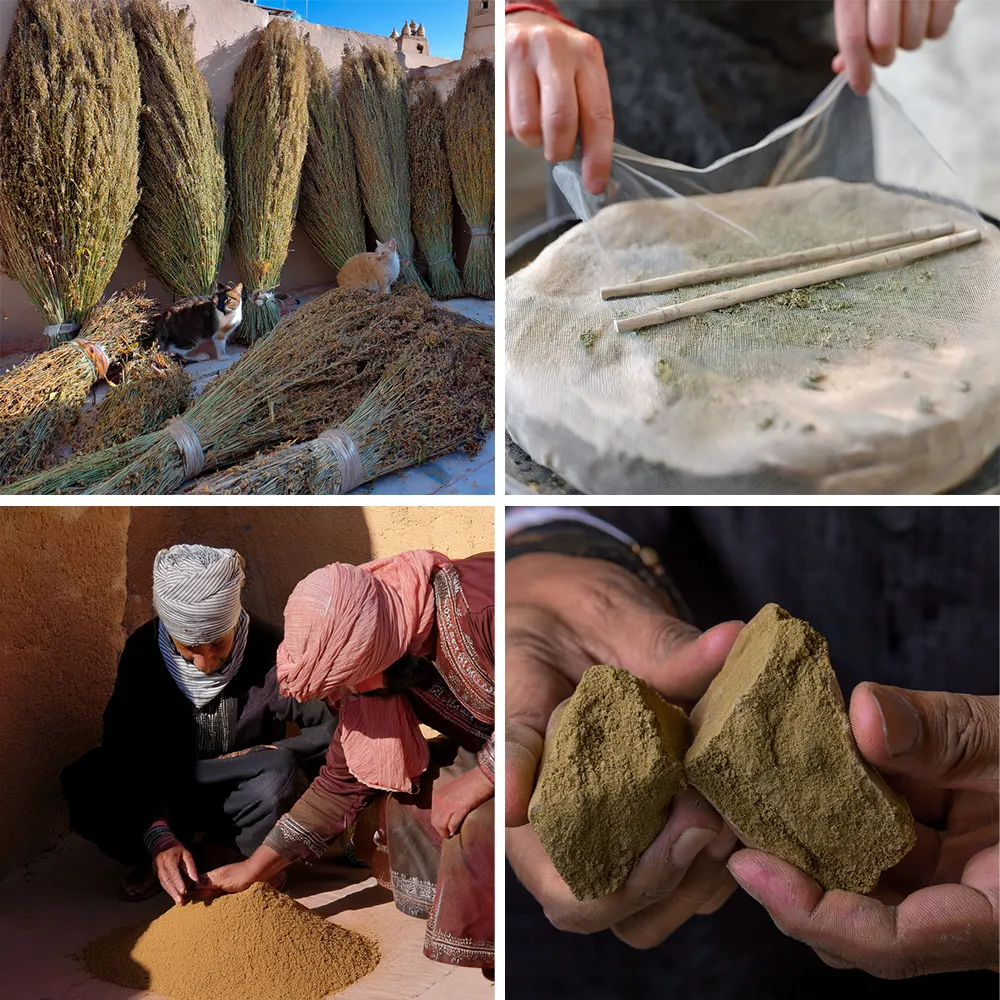
Many of you reading this article probably use the word “pollen” when referring to hash. This so-called “pollen” refers to a dry-sift cannabis extraction, which usually has a yellowish appearance and is not as dark as hash. Ultimately, however, they are the same material. Hash is pressed using heat and pressure, while what is commonly called “pollen” is only lightly pressed or left in a looser form. This explains their different appearance.
Both can be of very high or very low quality. As you probably know, the more plant material they contain, the lower their quality tends to be, making the product harder and less malleable. It will also be less likely to produce the desired bubbling effect when heat is applied. However, caution is necessary, as other substances may sometimes be present and can be misleading.
It is often believed that the effects of so-called “pollen” are milder and more uplifting, and that its flavor is also lighter. Hash, on the other hand, is sometimes considered stronger and more sedating due to the decarboxylation of THC from its acidic form when heat is applied, as well as the possible presence of higher traces of CBN, a cannabinoid commonly associated with more sedating effects.
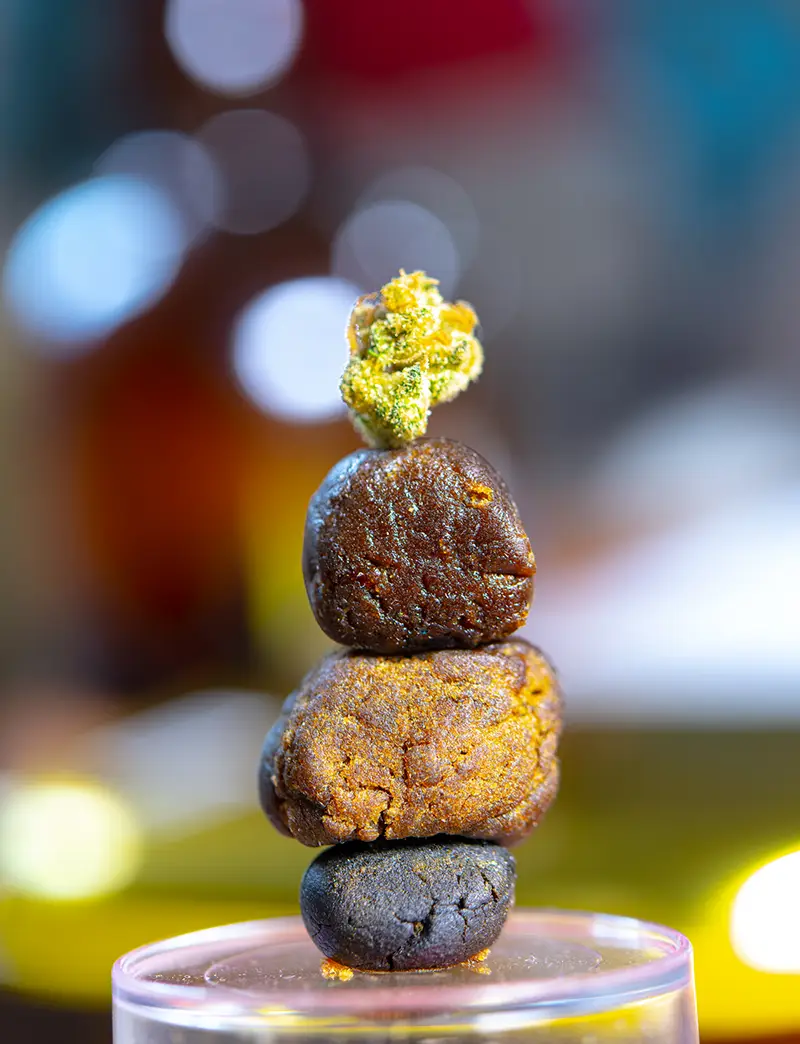
Different types of hash and a cannabis bud.
Is “Pollen” Purer Than Hash?
Both products have essentially the same purity at the starting point, since hash is what is often incorrectly called “pollen” after heat and pressure have been applied. They therefore develop different characteristics that cannot be compared in such a simple way.
Which One Is Best for You? Sweet Seeds® Helps You Choose
We conclude this article about the differences between hash and pollen by thanking you for joining us, and we hope it has helped expand your knowledge.
If you would also like to expand your collection with the highest-quality seeds, Sweet Seeds® offers an extensive catalog of top-level strains that are also ideal for producing high-yield extractions with excellent characteristics.
As you already know, whenever possible, avoiding the black market is key to enjoying the best products with greater safety.
Sweet harvests!
Sweet Seeds S.L. is not responsible for any misuse of the information provided in this article. Growing Cannabis may constitute a criminal offense or administrative infraction; please check the Cannabis legislation applicable in your place of residence. Sweet Seeds S.L. does not, under any circumstances, intend to promote illegal practices.

Deputy Director of the Content and Image Department at Sweet Seeds®.
Articles by Jaypp (see all)
- How to Germinate Marijuana Seeds: Basic Guide - 8 de October de 2026
- How to Fertilize Your Cannabis Plants Easily - 16 de September de 2026
- CBD for Osteoarthritis: How Can It Help? - 16 de September de 2026