
Cart
There are no more items in your cart



How to Re-veg Cannabis
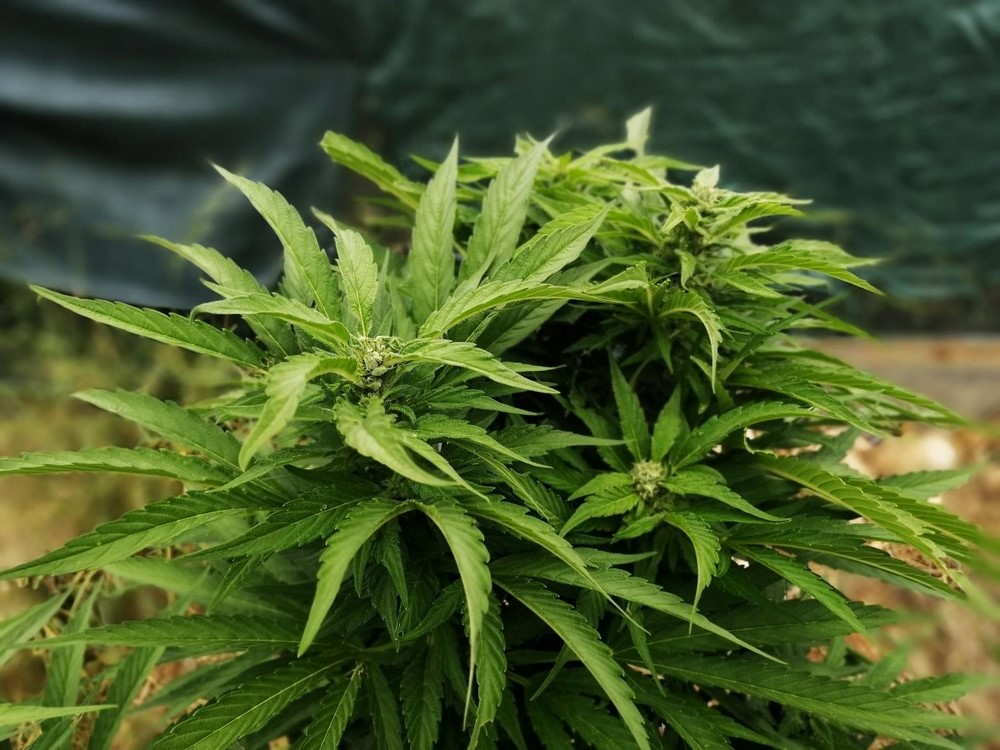
In this article, you will find everything you need to re-veg cannabis successfully, recover that plant you have fallen in love with, and avoid killing it in the process.
Re-vegging cannabis plants is a highly valuable technique that requires little effort and is relatively easy to carry out successfully. It gives you the opportunity to rescue a plant that particularly caught your attention during the growing process but from which you did not save any cuttings. Or perhaps you have been unable to buy more cannabis seeds but would like to grow again.
At Sweet Seeds®, we take an in-depth look at the process of re-vegging cannabis plants, from its definition to the detailed steps required to carry it out successfully. We will explain how this technique can save time and resources while allowing continuous production and the preservation of valuable genetics.
We will also provide practical advice on caring for your plants during cannabis regeneration and solving common problems that may arise.
By the end of this article, you will have a clear understanding of the benefits of re-vegging and the knowledge required to apply it in your own garden, whether you are an expert grower or just getting started. Let us create our own Frankenstein!
What Is Cannabis Re-vegging?
Technically, when we talk about re-vegging cannabis, we are referring to the process through which a plant that has entered flowering, or whose life cycle is approaching its end, returns to the vegetative growth stage. For this to happen, changes must be made to the photoperiod—that is, the number of hours of light and darkness the plant receives.
As you know, photoperiod-dependent cannabis plants begin flowering when they receive 12 or more hours of darkness. During this stage, the plants focus on producing buds until they complete their life cycle and eventually die, since cannabis plants are annuals. Autoflowering strains are an exception because they do not depend on the photoperiod and cannot be re-vegged. Their life cycle is determined from the moment they germinate and generally lasts no more than two or three months.
However, with photoperiod-dependent plants, increasing the number of light hours causes the plant to interrupt flowering and resume its initial growth cycle, returning to the vegetative stage. At this point, it stops producing flowers and begins developing new leaves and branches.
Re-vegging or regeneration should not be confused with replanting, which involves germinating new seeds to begin a new grow. Nor should it be confused with cloning, where new plants are created from an existing plant.
However, once a re-vegged cannabis plant has fully returned to the vegetative stage, cuttings can be taken from it.
Re-vegging can also occur unintentionally. In indoor grows, a light may sometimes be left on for longer than intended, disrupting the 12-hour dark period. This can interrupt flowering and consequently trigger re-vegging.
Something similar can happen outdoors with plants that were planted out of season, such as during winter, or with plants that are particularly sensitive to changes in light. Some F1 Fast Version® strains, for example, may begin flowering prematurely during the vegetative stage after several cloudy days. Once they receive enough hours of light again, they return to vegetative growth and begin to re-veg.
If this happens, you can remove any flowers that have started forming and allow the plant to return to its natural vegetative state.
Benefits of Re-vegging Cannabis
Although you can probably already imagine the many possibilities and benefits of re-vegging cannabis plants, the following are particularly worth highlighting:
Saving Time and Resources
There is no need to invest time or money in selecting the ideal seeds for your next grow. By re-vegging the plants you liked most from the current crop, you will already have plants available for the next one. You also save time during vegetative growth because the established root system remains intact and ready to resume supplying water and nutrients, while the main stem and any branches you leave uncut are also preserved.
In addition, there is no need to buy more substrate. Flushing the salts from the existing substrate and conditioning it with amendments and fertilizers should be more than enough to start a new grow.
You also do not need another room to keep mother plants when running a perpetual harvest, or a separate area for clones taken before moving the plants into flowering. Growers often take precautions by keeping a couple of clones from plants that are about to flower, just in case they discover the “holy grail” every cannabis grower is searching for: a plant that could become the next elite clone.
Continuous Production
You may not have enough space for mother plants and clones but still want to continue growing the plants you have just harvested. In this case, re-vegging cannabis is the solution.
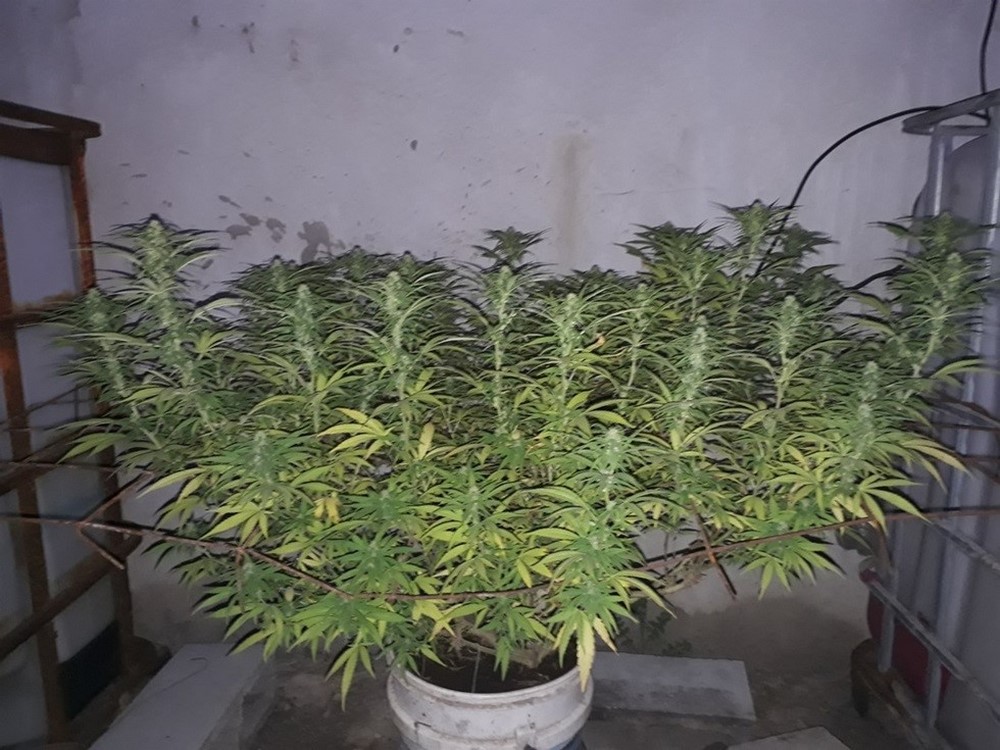
Even when a separate room for mother plants and clones is available, home growers may allow re-vegged cannabis plants to grow until cuttings can be taken from them. Once the process is underway, continuous growing becomes possible: plants flower in one room while others complete their vegetative stage in another.
Preserving Valuable Genetics
Imagine that, when harvesting your plants, you discover one that particularly catches your attention, but you did not take any cuttings before moving it into flowering. This technique makes it easy to preserve it, since you can use cannabis regeneration to bring back a plant that would theoretically die after harvest.
As you can see, re-vegging cannabis offers many benefits. Now, let us look at how to carry out the process and achieve the highest possible success rate.
Steps for Re-vegging Cannabis
Now we come to the part you are probably most interested in: how to re-veg cannabis step by step.
Selecting the Right Plant
Although the process can be carried out with any plant, not all plants will respond in the same way. As a general rule, it is best to choose plants that are as healthy as possible and still have enough foliage and chlorophyll. A plant that is severely depleted of nutrients and completely yellow may not recover successfully.
Sativa-type plants are usually somewhat easier to re-veg because they tend to have more vegetative mass and greater branching.
Characteristics to Consider
As mentioned above, look for plants that still have some vigor and try to assess the condition of the roots, since it is important for them to remain healthy. If the root system is damaged, the re-vegging process will be more difficult. Look for white or cream-colored roots.
Preparing the Environment
The area where the process will take place should be thoroughly cleaned, and spaces with excessively high humidity should be avoided. Until new foliage appears, too much humidity can be fatal to the plant. You will need the lighting normally used for vegetative growth and some fresh substrate. The latter is not essential, but it will support the development of new roots.
Light, Temperature, and Humidity
Once the process begins, the plant should remain under a light cycle providing between 18 and 24 hours of light, preferably using a blue-spectrum light designed for vegetative growth. A more yellow light or one intended exclusively for flowering will slow down the process.
The ideal temperature should remain at a minimum of around 18 °C during the dark period and between 22 °C and 25 °C during the light period.
Initial relative humidity should not exceed 60% until new leaf growth becomes visible. At that point, it can be increased to as much as 80%.
The area should be well ventilated, with fans used to keep the air moving.
Cutting and Pruning
This is the most important part. Harvest the main parts of the plant and cut the main stem, but leave the lower section intact. You can leave between two and four branches uncut. On the branches you keep, harvest some of the flowers but leave a few buds behind, preferably those with the greatest number of healthy green leaves.
Make clean cuts close to the nearest node using sterilized tools. If you have a pruning sealant, apply it to the cuts. A simple option is to use modeling clay or adhesive tape, for example.
Once the plant has been pruned, remove it from the pot and prune the roots. Besides reducing the size of the root ball so that the pot can later be filled with fresh substrate, this encourages the development of new fine, branching roots, which absorb the water and nutrients required by the plant.
The larger roots primarily support the plant. Since its overall size has now been considerably reduced, they are not as necessary at this stage.
The Re-vegging Process
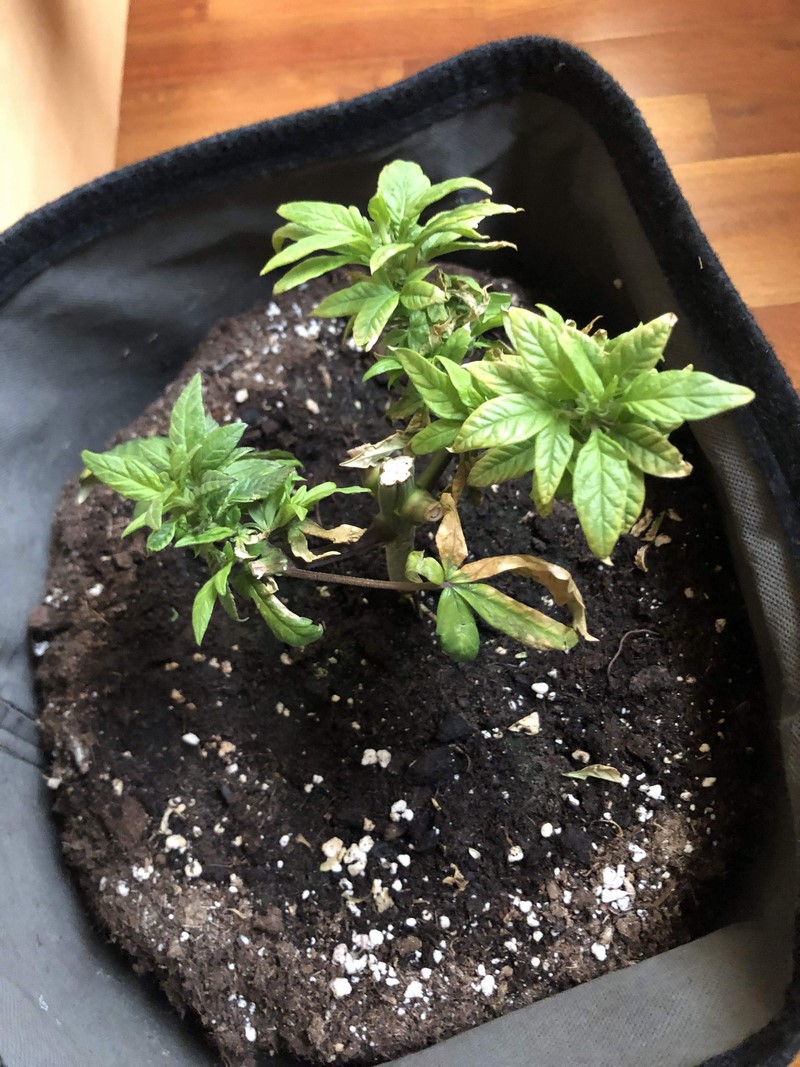
After a few days, new branches and leaves will begin emerging from the old buds that were left on the plant. You will see new leaves growing from the calyxes, initially with one leaflet and later with three or five. Reaching a fully vegetative stage, with new leaves consisting of three or five leaflets, may take up to a month or even longer with certain strains.
Once enough new shoots and leaves have developed, the old buds can gradually be removed, taking great care not to cut the new growth. Botrytis can develop in these old buds, which is something we want to avoid.
Specific Nutrients and Care
Do not forget to provide fresh nutrients. Whether using new or existing substrate, the plants must receive enough vegetative nutrients, together with vitamin B1 or a root stimulator. However, do not overfeed them, as an excess of nutrients can be harmful.
Care During Re-vegging
It is crucial to keep a close eye on the cannabis re-vegging process at all times. Monitor the plants for pests and diseases so that any problems can be addressed as soon as possible.
Adjust the nutrient supply as the plant develops, gradually increasing the dosage as it grows.
Bear in mind that this technique places the plant under considerable stress, so every detail must be carefully managed.
Common Problems and Solutions
Stress Caused by the Photoperiod Change
The plant may become stressed by the change in its light cycle.
Solution: Adjust the light schedule gradually, adding one hour of light each day until reaching 18 hours.
Pests and Diseases
Re-vegged plants may be more susceptible to pests and diseases due to the stress caused by the change in their cycle.
Solution: Maintain a clean environment and regularly inspect the plant for signs of pests or diseases. Use organic treatments such as neem oil or insecticidal soap to control infestations.
Nutrient Deficiencies
The plant may show signs of nutrient deficiencies when changing stages, such as yellow leaves or slow growth.
Solution: Adjust the feeding schedule to provide the nutrients required for vegetative growth. A balanced fertilizer with a higher nitrogen content may be beneficial.
Lighting Problems
Inadequate lighting can negatively affect the re-vegging process.
Solution: Make sure the plant receives enough high-quality light. Full-spectrum LED lights are a good option for vegetative growth. Keep the lights at an appropriate distance to prevent light burn.
Watering Problems
Improper watering can cause water stress and affect plant growth. However, overwatering can be fatal, since the plant initially has relatively low water requirements.
Solution: Adjust watering according to the plant’s needs during the vegetative stage. Avoid overwatering and ensure that the substrate drains properly to prevent root rot.
Conclusion
We do not want to end this article without sharing the best advice we can give you: be patient. As with every stage of cannabis growing, patience and careful attention can greatly improve the chances of success.
Enjoy every stage of the process, especially when carrying out techniques like this one, where we get to play God, or Dr. Frankenstein, by bringing back a plant that would otherwise have died.
Do not forget to visit our catalog to buy cannabis seeds and find your next “patient.”
Thank you for reading.
Sweet harvests!
Sweet Seeds S.L. is not responsible for any misuse of the information provided in this article. Growing Cannabis may constitute a criminal offense or administrative infraction; please check the Cannabis legislation applicable in your place of residence. Sweet Seeds S.L. does not, under any circumstances, intend to promote illegal practices.

Deputy Director of the Content and Image Department at Sweet Seeds®.
Articles by Jaypp (see all)
- How to Germinate Marijuana Seeds: Basic Guide - 8 de October de 2026
- How to Fertilize Your Cannabis Plants Easily - 16 de September de 2026
- CBD for Osteoarthritis: How Can It Help? - 16 de September de 2026